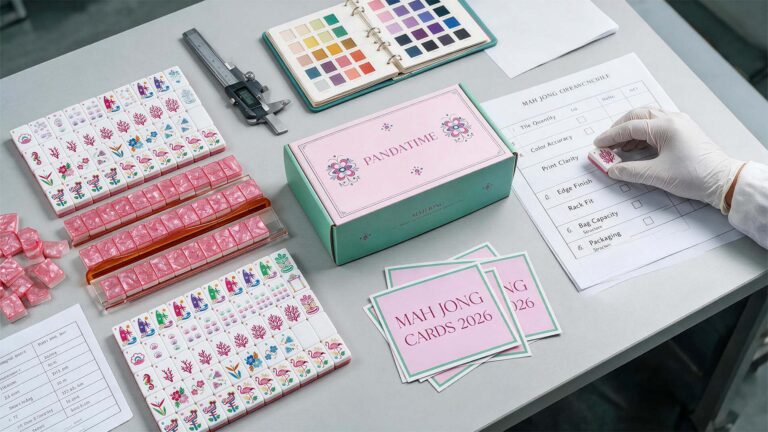

Launching private label American Mahjong sets is not simply a logo-placement project. A retail-ready set combines game configuration, design, accessories, packaging, labeling, and quality standards. If those decisions remain scattered across emails and reference images, suppliers may interpret the same request differently—and a sample that looks attractive may still be difficult to reproduce at scale.
This guide shows retail buyers how to prepare a reviewable brief and approve a physical sample. Project-specific specifications, compliance obligations, commercial terms, and timing must still be confirmed.
What “Private Label” Should Mean in Your Project
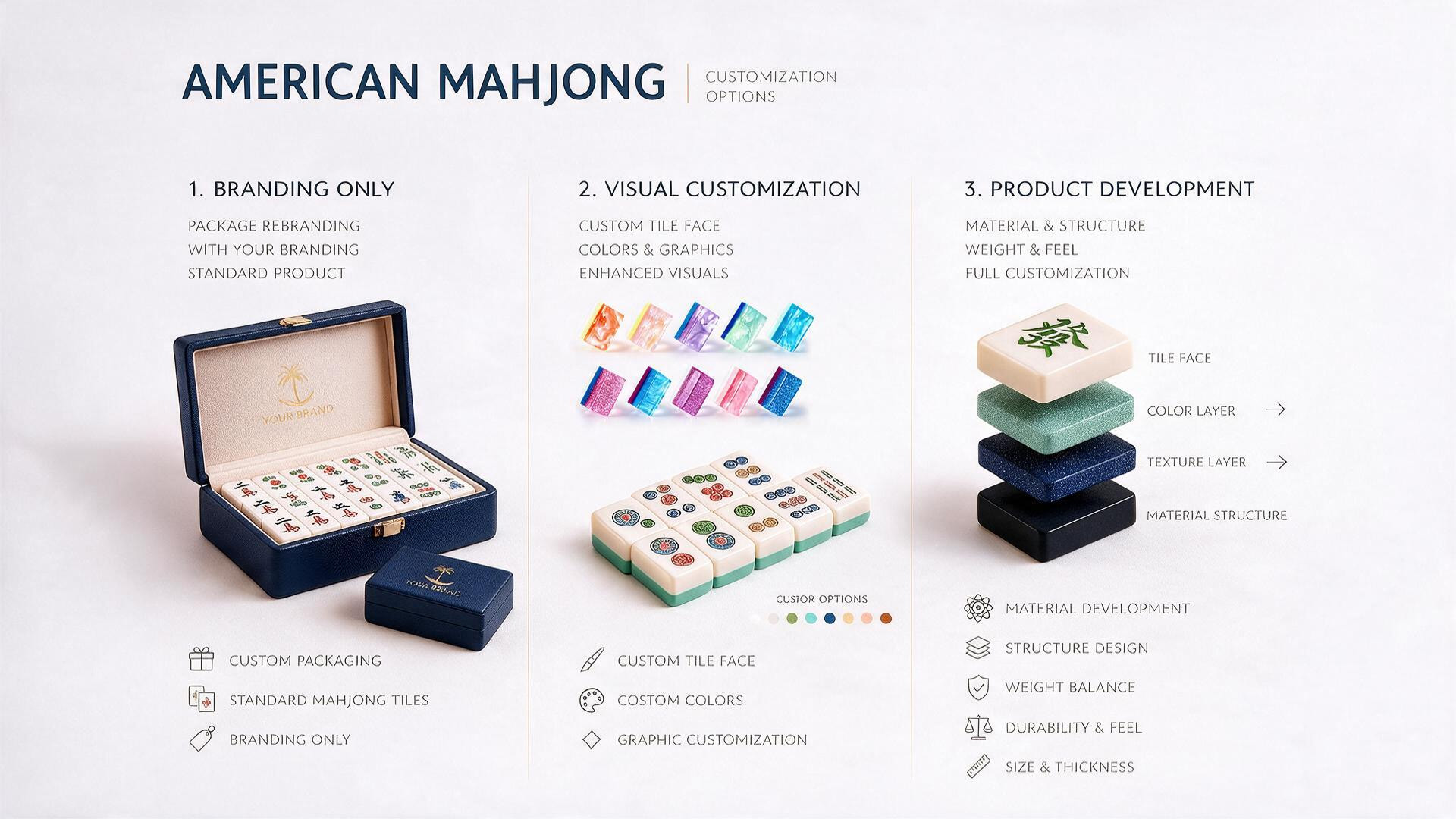
Private label can describe several levels of product development. At the simplest level, a buyer may select an existing product direction and add branded packaging. At a deeper level, the project may involve original tile artwork, custom colors, accessory coordination, packaging structure, and a complete visual identity. These two projects require different development work, review steps, and commercial assumptions.
Before contacting an American Mahjong supplier, define the intended customization level:
- Branding only: logo, label, insert card, or packaging artwork applied to an existing product direction.
- Visual customization: custom tile faces, backs, colors, typography, and coordinated accessories.
- Product development: a more extensive combination of material, dimensions, construction, components, packaging, and original artwork.
This distinction prevents an early quotation from being mistaken for a final production scope. Buyers planning a more original collection can also review TOPRAY’s custom American Mahjong product development guide before preparing files.
Start With the Customer and Sales Channel
A strong product brief begins with the commercial context, not a color palette. Tell the supplier who will buy the set and where it will be sold. A boutique gift product, a club teaching set, an e-commerce launch, and a department-store program may need different packaging, presentation, durability, and information hierarchy.
Include these points:
- Target customer and expected use environment
- Sales channel: online, specialty retail, wholesale, club, event, or gifting
- Target retail positioning rather than an unsupported “premium” label
- Planned launch window and any retailer review milestones
- Countries or regions where the product will be sold
- Whether the assortment includes one design or a coordinated collection
The destination market matters because artwork, claims, warnings, language, origin marking, and testing responsibilities may vary. Treat compliance as a defined workstream, not a line added to the box at the end.
Build a Complete Product Brief
1. Define the Set Configuration
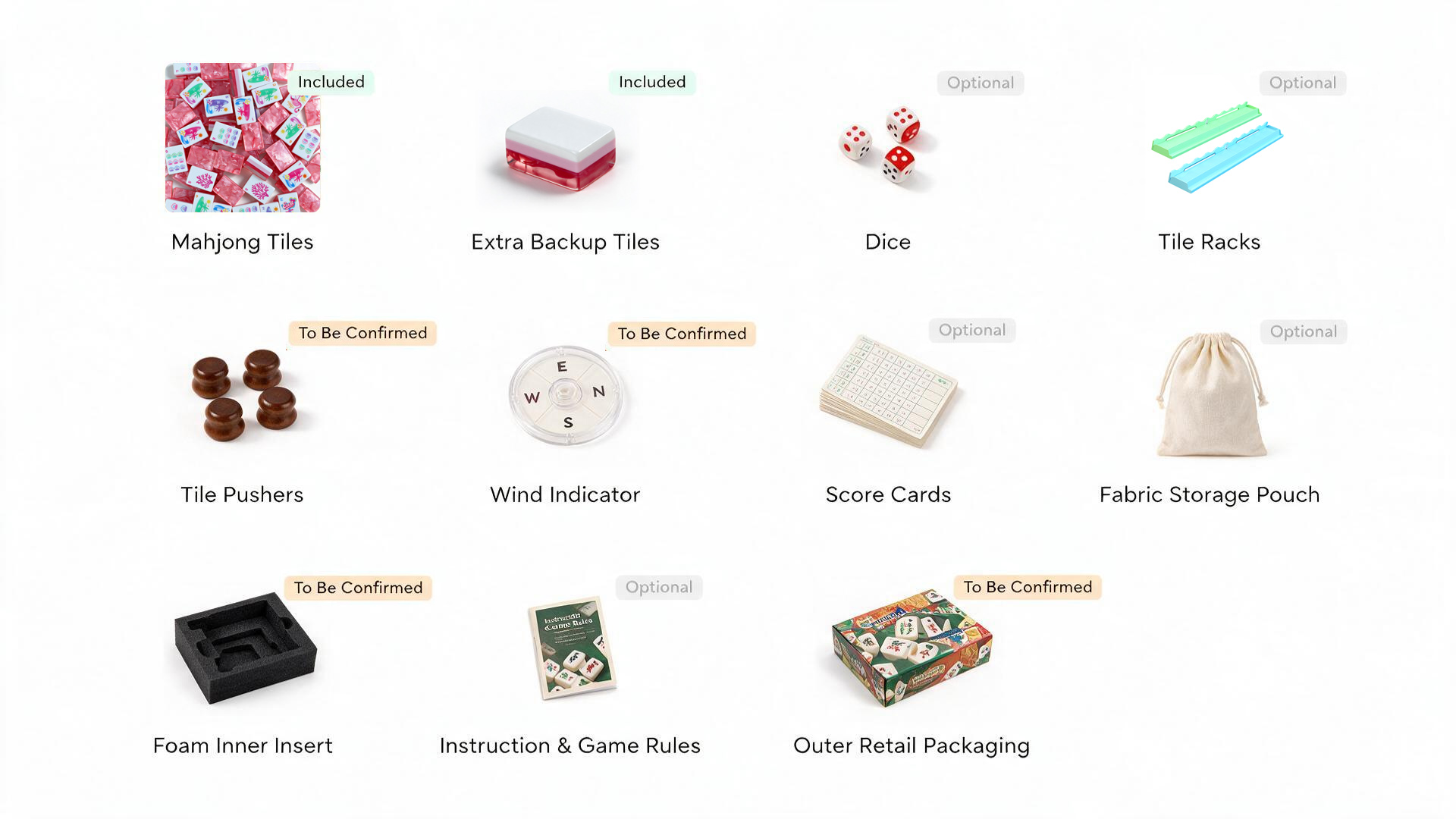
List every expected component instead of writing “complete American Mahjong set.” Document the required tile configuration, spare tiles if applicable, dice, racks, pushers, wind indicator, scorecard expectations, bags, trays, and instructions. The buyer and supplier should confirm the component list in writing because market conventions and retailer requirements are not always identical.
If racks and pushers are part of the assortment, record their required quantity, relationship to tile dimensions, storage method, color direction, and packaging position. A component that fits visually may still create a poor experience if tiles do not sit securely or the accessory does not fit the box.
2. Separate Approved Dimensions From Preferences
Your brief should distinguish mandatory specifications from preferences that remain open to supplier recommendations. For tiles, consider length, width, thickness, corner profile, weight target or acceptable range, face orientation, and how the finished set should feel in play. For packaging, include external size constraints if the product must fit a shelf, shipping carton, or marketplace fulfillment requirement.
Do not approve dimensions from a rendering alone. Verify the physical sample, and clearly separate inspiration from features that must not be copied.
3. Create an Artwork Control Package
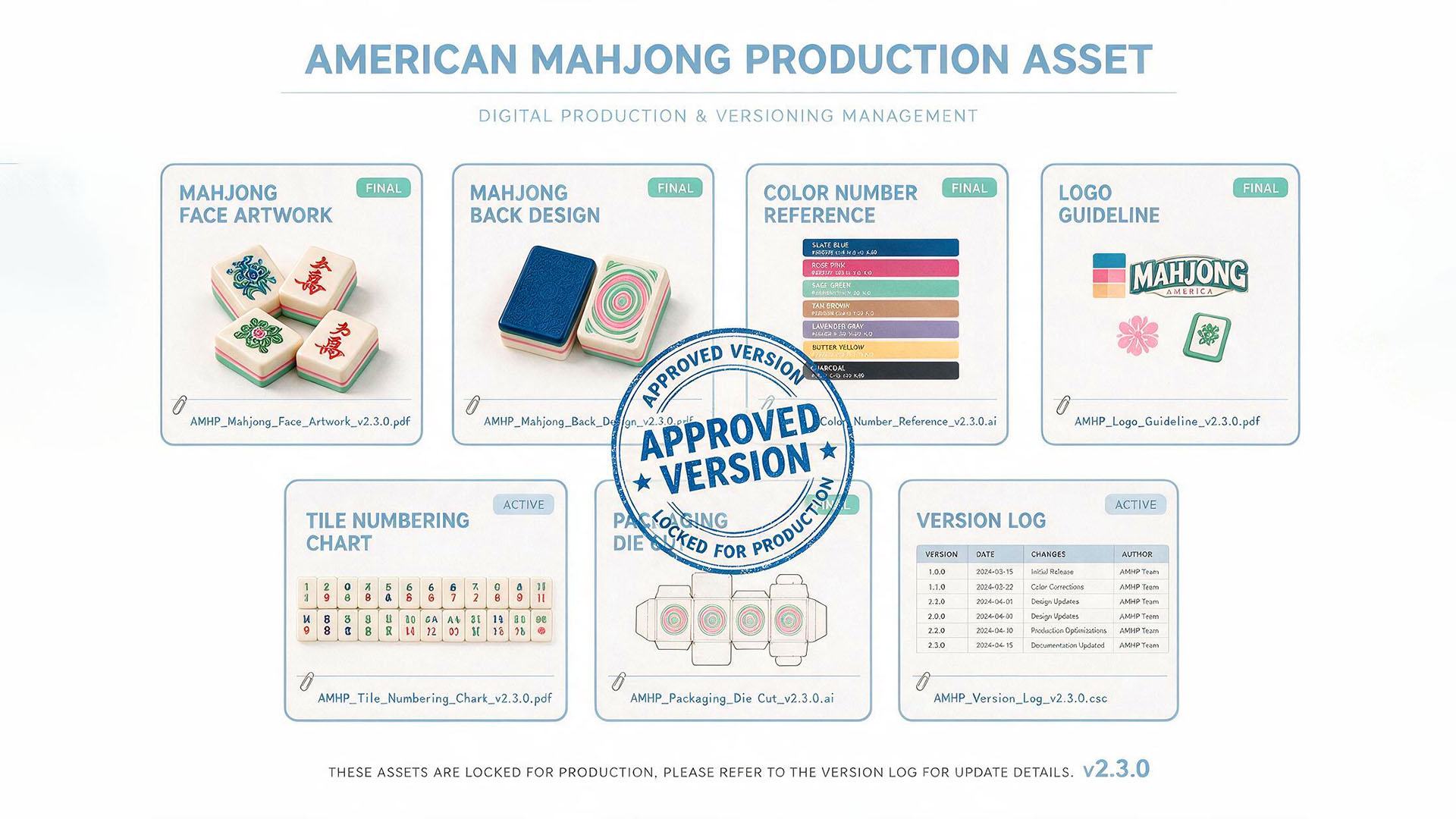
Artwork files should identify each tile face, back design, color, orientation, and version. Use a clear naming system and maintain one approved master folder. The supplier should not have to decide which attachment is current.
A practical artwork package includes:
- Editable vector files where appropriate
- Color references and an explanation of where each color is used
- Logo files plus minimum-size and clear-space rules
- A numbered map matching artwork to each tile or component
- Packaging dieline artwork with linked fonts and images
- A version log showing the date and approval status
Before using a brand name or logo, confirm that the buyer has the right to use it. The U.S. Patent and Trademark Office’s trademark basics explain the role of trademarks in identifying the source of goods and distinguishing one brand from another. Buyers should obtain appropriate legal advice for clearance and registration questions.
4. Specify Material and Finish Expectations
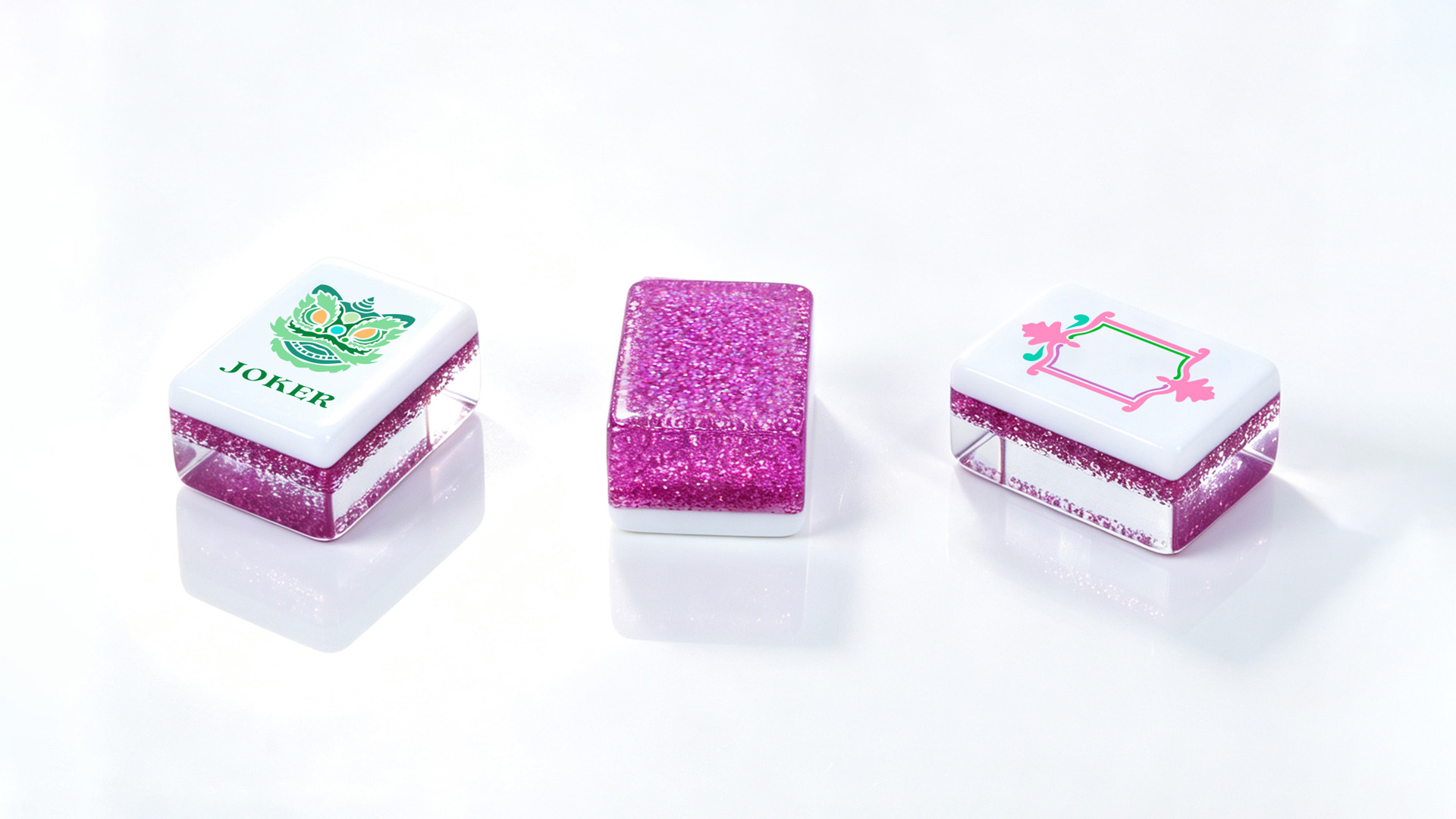
Words such as “acrylic,” “glossy,” or “luxury” do not fully define an acceptable result. Describe the visible and functional outcomes you expect: transparency or opacity, surface sheen, edge clarity, color consistency, print coverage, resistance to visible scratches under normal handling, and acceptable variation between components.
For acrylic products, evaluate actual samples under consistent lighting. Photography, screen calibration, material thickness, print layers, and surface finish can all change perceived color. The existing acrylic Mahjong tile inspection guide provides a structured review of material, dimensions, edges, printing, configuration, and packaging.
5. Design Packaging Around Retail and Transit
Packaging has at least three jobs: protect the set, present the brand, and communicate required information. Define the outer format, internal organization, opening experience, accessory placement, instruction storage, and shipping protection. If the set will be sold online, review packaging not only as a shelf display but also as a parcel moving through fulfillment and delivery.
Create a packaging copy checklist covering product name, contents, intended-use statements, warnings where applicable, barcode placement, importer or responsible-party information, country-of-origin marking, care guidance, and disposal or material statements. Avoid origin claims that are not substantiated. The FTC’s Made in USA guidance explains that unqualified U.S.-origin claims must meet its “all or virtually all” standard and that implied claims can arise from the overall marketing presentation.
Decide Compliance Responsibility Before Sampling
Do not assume that a supplier’s experience with similar products automatically answers the requirements for your brand, age grading, market, or sales channel. Assign responsibility for product classification, testing, documentation, labeling, and record retention in writing.
In the United States, whether a product is treated as a children’s product or a general-use product affects the applicable safety framework. The U.S. Consumer Product Safety Commission notes that classification considers the manufacturer’s stated use, packaging and promotion, consumer recognition, and age-determination guidance. Because design and marketing choices can influence classification, buyers should settle intended age positioning before finalizing packaging and test plans.
This guide is operational guidance, not legal advice. The brand or importer should confirm applicable requirements with qualified compliance professionals and the relevant authorities.
Use a Three-Stage Sample Approval Process
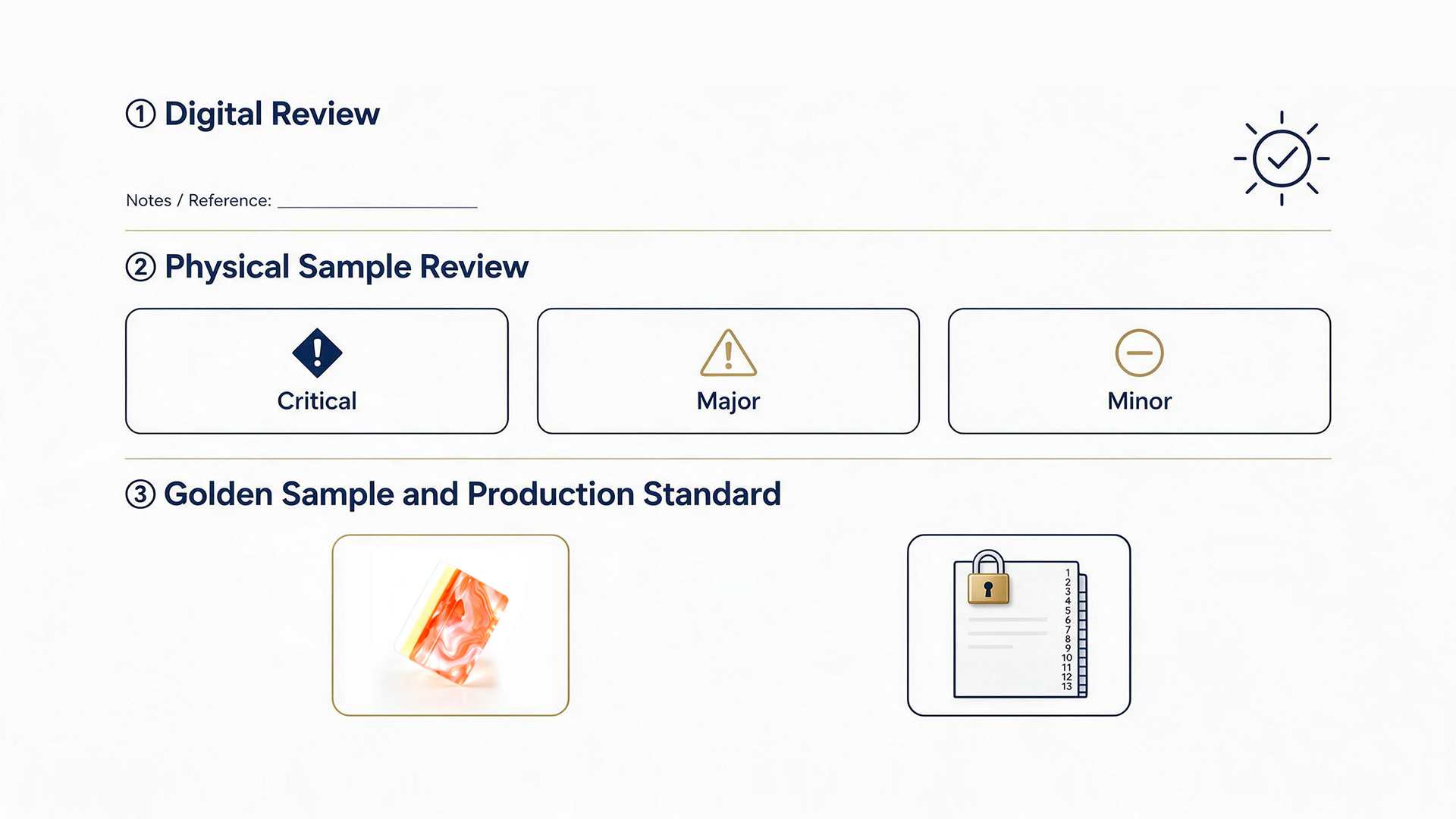
Stage 1: Digital Review
Review component lists, artwork placement, spelling, symbols, color callouts, packaging copy, and dielines before physical production. Digital approval confirms the design direction; it does not prove color, finish, fit, or durability.
Stage 2: Physical Sample Review
Inspect the sample against a written checklist. Photograph the set under controlled lighting and record measurements rather than relying on comments such as “looks good.” Check every component, artwork registration, repeated print quality, edges, surface condition, color relationships, accessory fit, tray organization, package opening, and visible damage after transit.
Classify feedback clearly:
- Critical: safety, legal, configuration, or function issue that prevents approval.
- Major: material, color, print, fit, packaging, or brand issue that affects saleability.
- Minor: limited cosmetic variation that should be defined against an agreed standard.
Stage 3: Golden Sample and Production Standard
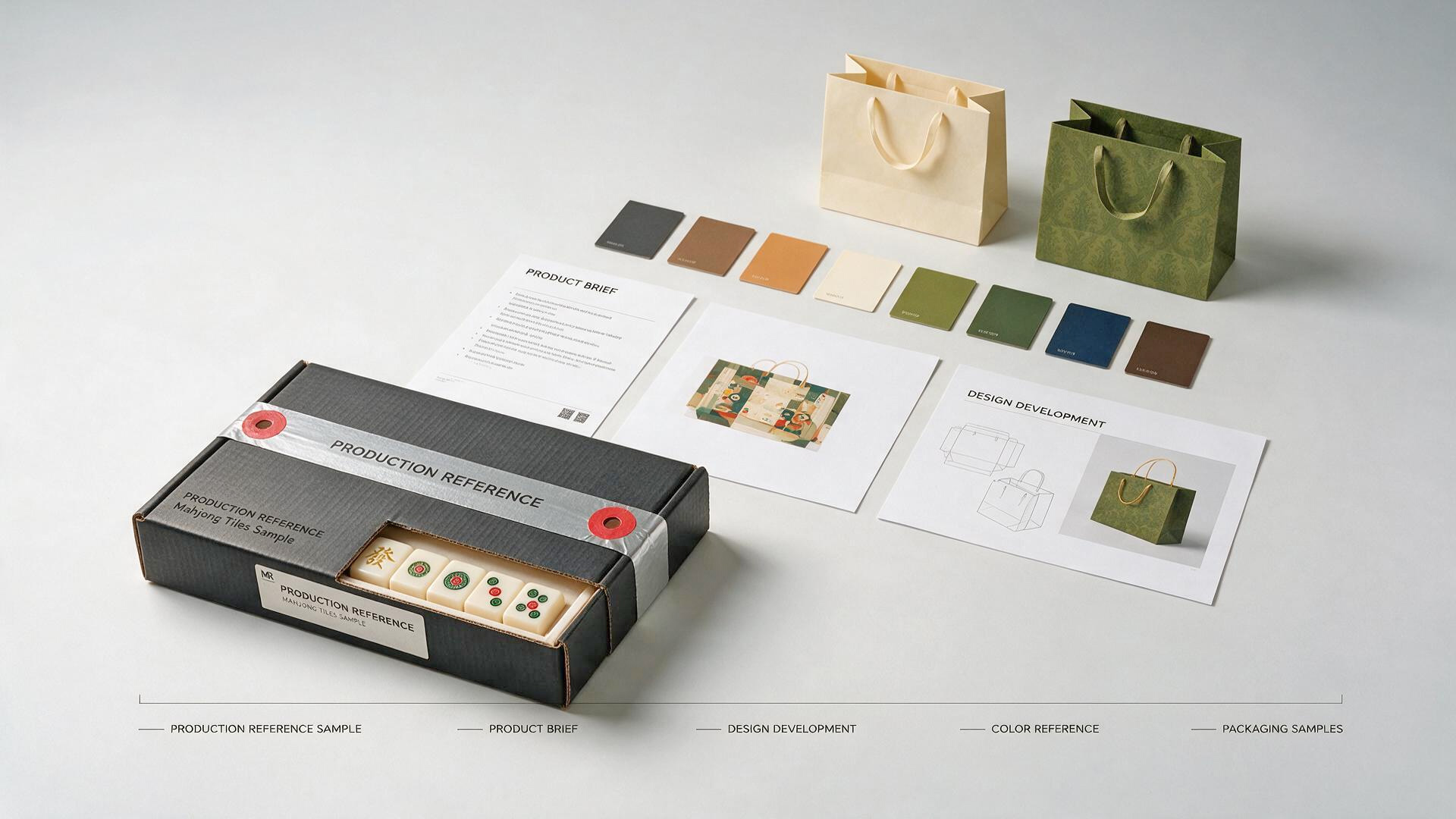
Once corrections are complete, identify the final approved sample and its supporting files as the production reference. Record the version, approval date, photographs, measurements, color references, component list, packaging files, and any agreed tolerance or defect criteria. Approval should cover the complete packed set, not only loose tiles.
A golden sample reduces ambiguity, but it should be paired with written inspection criteria. Define how a production inspection will sample units, what will be checked, how defects are classified, and who can approve deviations. Never allow an undocumented chat message to override the controlled specification.
Questions to Ask an American Mahjong Supplier
- Which requested features use existing capabilities, and which require new development?
- What files and physical references are needed before a reliable quotation?
- Which components are made or sourced separately?
- How will color, print position, dimensions, and packaging be checked?
- What sample stages are recommended for this specific customization level?
- How are approved files and samples transferred into production controls?
- Which testing documents can be discussed after the product classification and market are confirmed?
- How will proposed substitutions or production deviations be communicated for approval?
These questions are more useful than asking only for the lowest unit price. A quotation becomes comparable when every supplier is pricing the same configuration, artwork status, packaging, quality standard, and responsibility split. Retail buyers evaluating broader sourcing terms can also visit the Wholesale American Mahjong page.
FAQ
What information is needed to quote a private label American Mahjong set?
Provide the target market, sales channel, estimated quantity, tile and accessory configuration, customization level, artwork status, material direction, packaging needs, compliance expectations, and desired timeline. If decisions are still open, label them as assumptions so the quotation can state what is included.
Can a buyer start before all artwork is finished?
Yes, early feasibility discussion can begin with a structured brief and reference direction. However, final sampling and production approval require controlled artwork and confirmed specifications. Quotes based on unfinished files should be treated as preliminary.
Is a digital rendering enough to approve production?
No. A rendering helps verify layout but cannot confirm physical color, dimensions, weight, edge finish, print quality, accessory fit, packaging performance, or transit protection. Physical sample approval is a separate stage.
Who is responsible for U.S. compliance?
Responsibilities should be assigned in the purchase agreement and project plan. Requirements depend on product classification, claims, materials, intended users, and destination market. Brands and importers should verify obligations with qualified specialists and official agencies rather than assuming one test applies to every project.
How can buyers reduce differences between the approved sample and bulk production?
Use an approved golden sample, controlled artwork, a signed component list, measurable specifications, agreed defect criteria, and a documented inspection plan. Require written approval before any material, component, color, or packaging substitution.
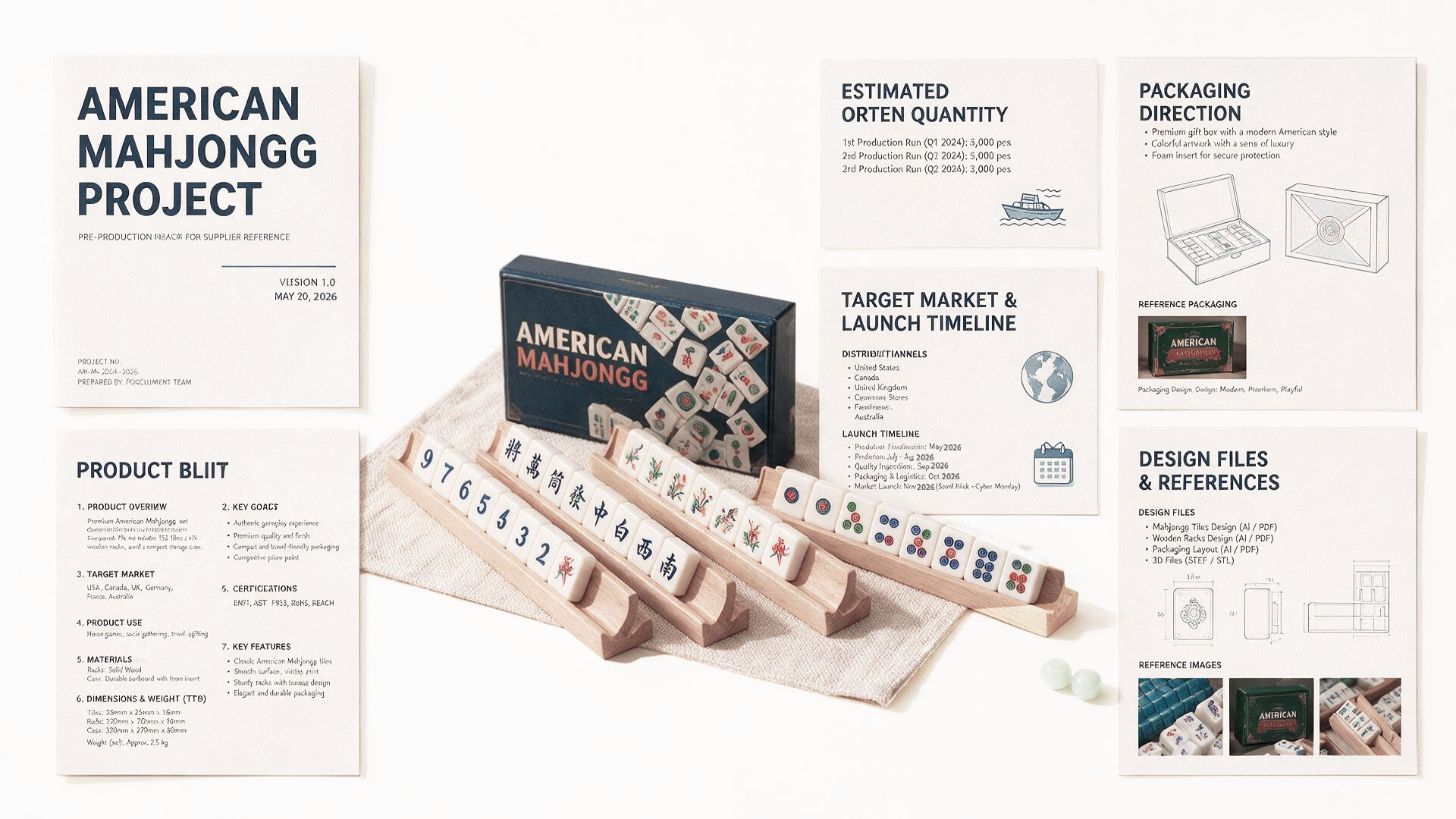
Turn the Brief Into a Reviewable Project
A successful private label American Mahjong program begins when brand intent is converted into decisions that a supplier can quote, sample, verify, and repeat. The most valuable brief is not the longest document; it is the one that removes ambiguity about the customer, configuration, artwork, materials, packaging, compliance responsibilities, and approval standard.
TOPRAY supports B2B discussions for wholesale and customized American Mahjong projects. To begin a feasibility review, send your product brief, reference images or design files, estimated quantity by design, packaging direction, destination market, and required launch timing through the TOPRAY customization page. Project-specific specifications, sampling steps, commercial terms, and compliance documentation can then be evaluated against the confirmed scope.