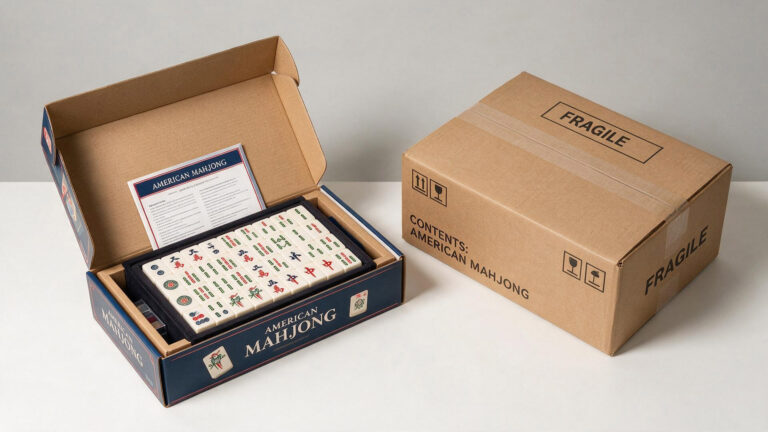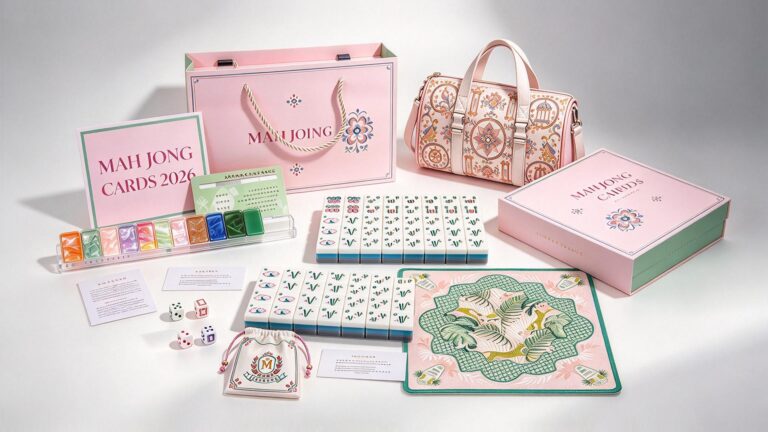
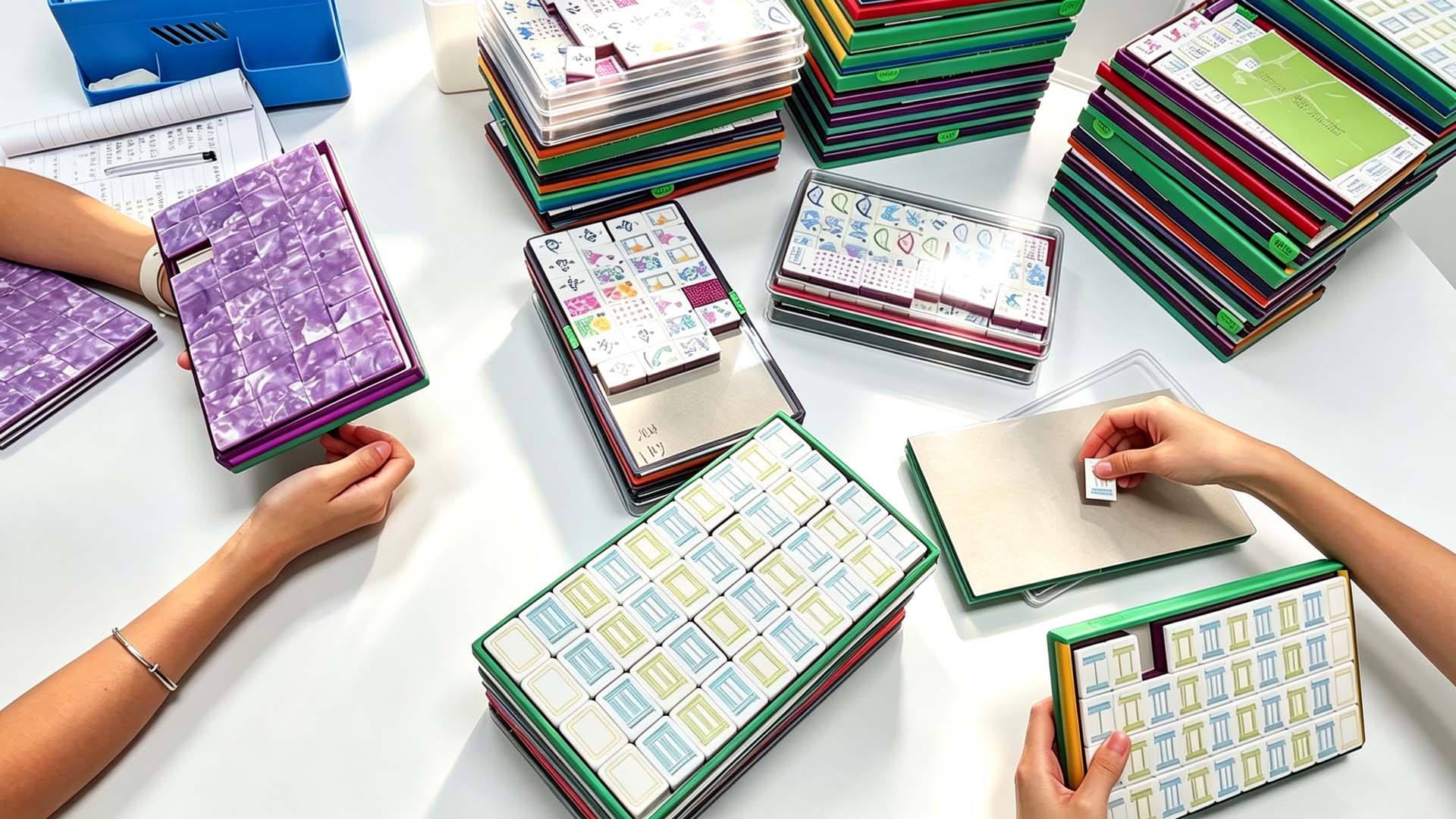

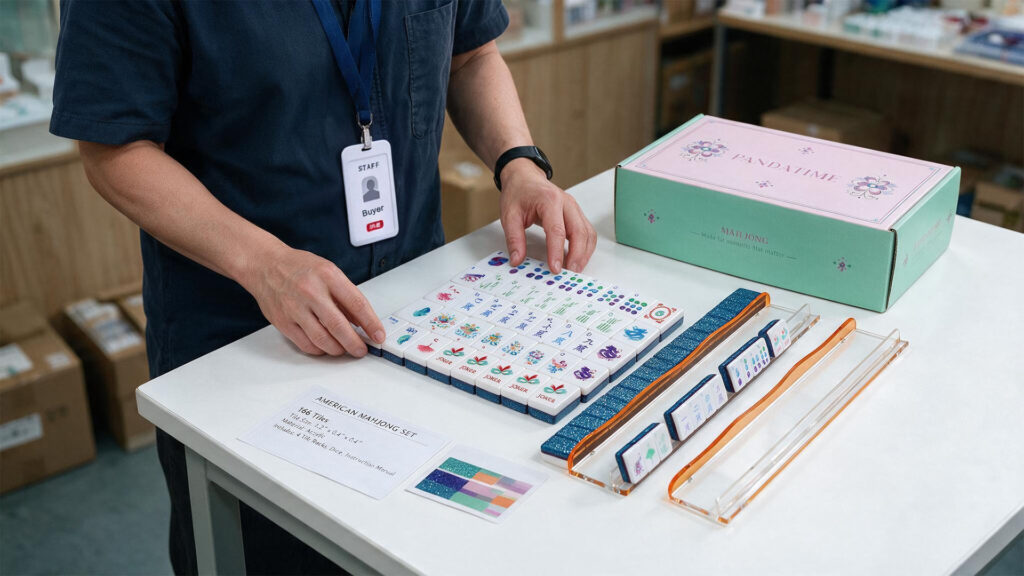
Finding an American Mahjong manufacturer is not the same as finding a set that looks good in a catalog. A retailer or brand must be able to repeat an approved product, deliver the right assortment to its sales channel, and resolve differences before a bulk order is placed. A polished product photo does not show who controls the artwork, how components are checked, or which version of a sample will become the production reference.
This guide is a supplier-evaluation framework for U.S. buyers. It does not assume that every supplier owns every process or that any particular certificate applies to every set. Use it to request comparable evidence, identify open decisions, and decide when a project is ready for quotation and sampling.
Start With the Buying Decision, Not the Supplier Pitch
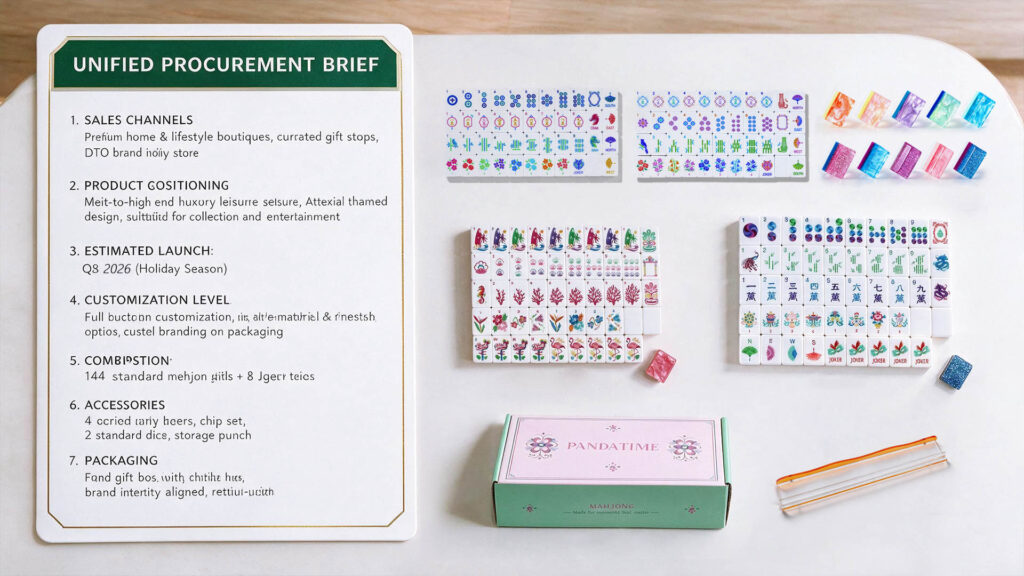
Write down the proposed sales channel, buyer, positioning, target launch window, and intended level of customization. A club order of familiar playing sets, a specialty-store collection, and an original private-label range have different approval burdens. If the initial inquiry only says “custom Mahjong set,” two suppliers may quote entirely different configurations.
State whether you need an existing assortment, a branded version of an existing product, or a newly developed design. List the expected set components and any optional accessories separately. If the project includes original artwork or packaging, identify who supplies files and who approves changes. A comparison is useful only when each supplier is responding to the same brief.
For buyers still defining order structure, TOPRAY’s wholesale American Mahjong page is the commercial entry point; this article focuses on evaluating the supplier behind a proposed order.
Clarify What “Manufacturer” Means for This Project
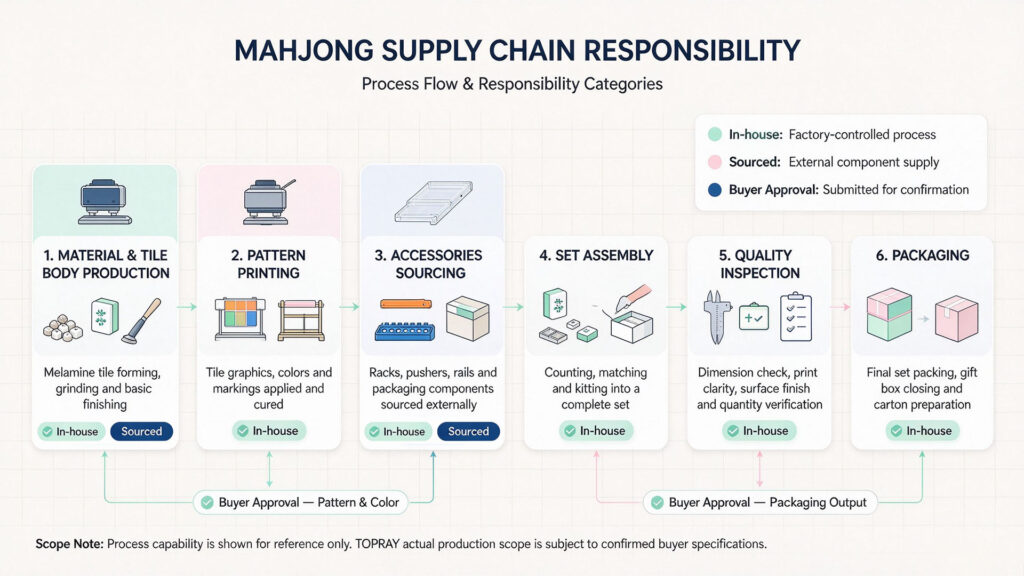
A supplier may produce tiles, assemble sets, source accessories, coordinate packaging, or combine several of these roles. That can be perfectly workable. The risk is assuming that “factory” means every step happens at one site under one team. Ask for a process map that names the responsible party for each critical operation, even if subcontractor names remain confidential.
Questions that establish operational responsibility
- Which activities are performed in-house, and which are sourced or subcontracted?
- Who owns the production specifications and approved artwork files?
- Who checks incoming components, finished tiles, and the packed set?
- Who can authorize a material or process change after sample approval?
- Which contact handles defects, replacements, and corrective action?
Request current photos or a live walkthrough of the relevant process, with commercially sensitive customer work excluded. Images are evidence of an activity, not proof that the supplier performed every step of a particular order. Ask the supplier to connect the evidence to your proposed product and approval workflow.
Compare a Complete Set, Not a Tile Sample Alone
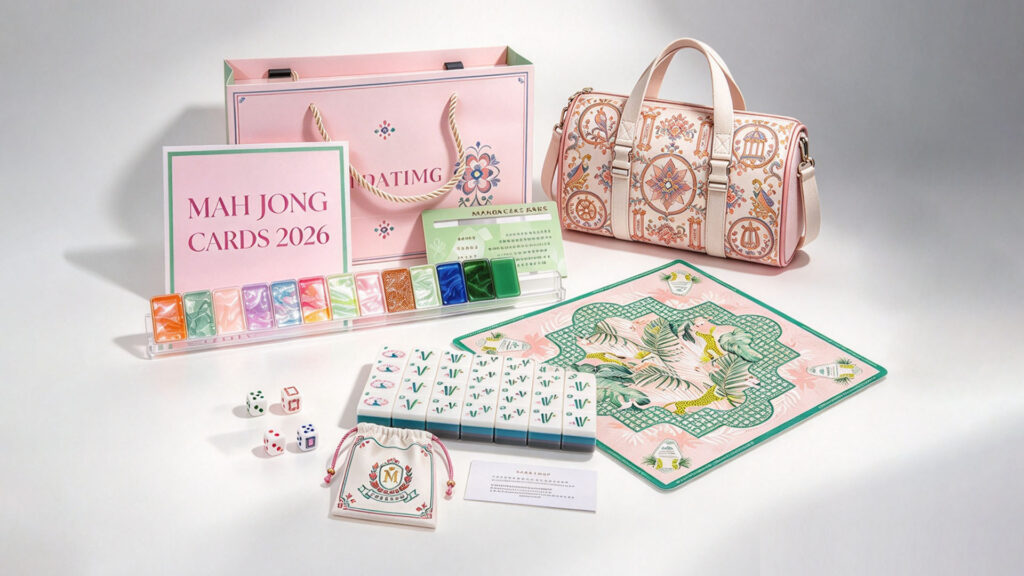
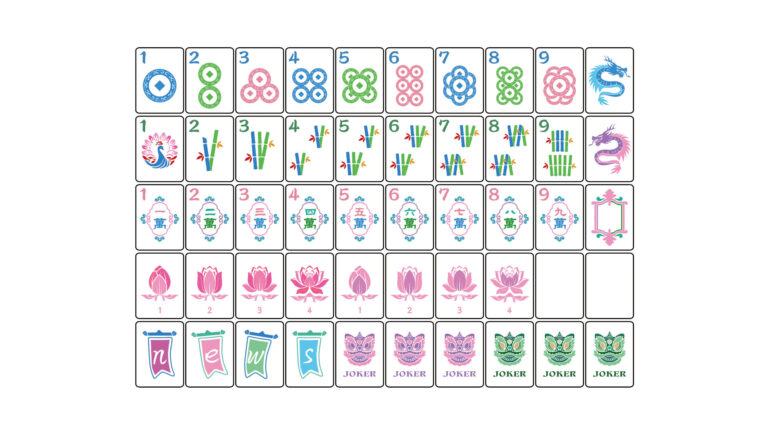
A Mahjong set is a system. Tile count and face artwork, tile dimensions, edge profile, finish, dice, racks, pushers, storage, instructions, and packaging should be specified as applicable. The number and identity of components must follow the buyer’s actual assortment brief; do not copy a generic online listing into a purchase order.
Ask each supplier to return a line-by-line configuration sheet marking included, optional, buyer-supplied, and unavailable items. A blank item is an unresolved decision, not an implied inclusion. If racks and pushers are part of the offer, test them with the actual approved tile sample; the Mahjong pushers category can be used to identify the accessory conversation, but compatibility remains project-specific.
For material-focused questions, review how acrylic Mahjong sets are made. A material name alone does not establish the appearance, construction, or durability of a particular finished set. Request a physical sample and a written acceptance standard for the features that matter to your channel.
Use a Three-Gate Sample Approval Process
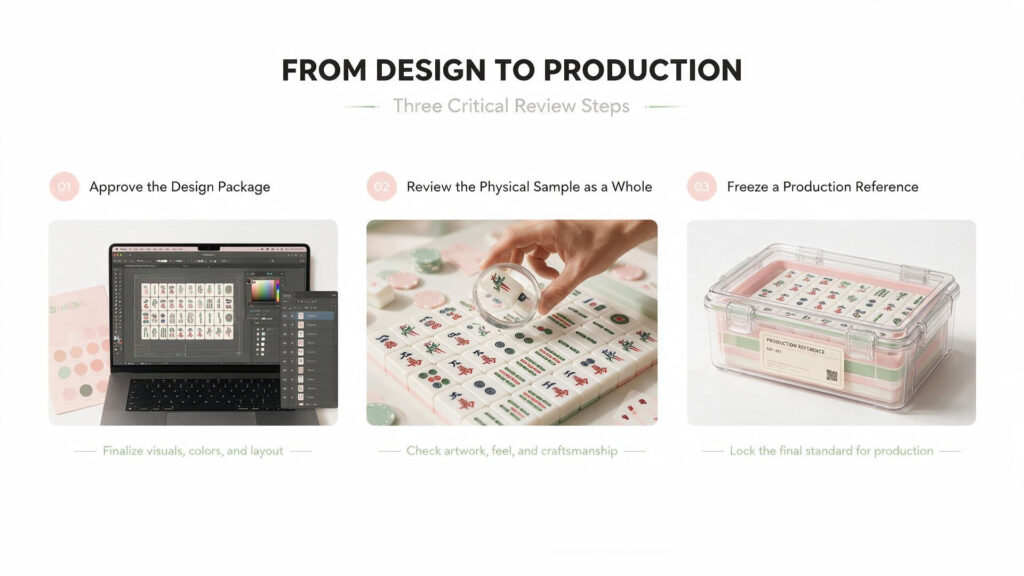
Many disputes begin when an attractive early sample is treated as approval for an undefined bulk specification. Separate the decision into three gates and record exactly what passes at each one.
Gate 1: Approve the design package
Confirm the component list, artwork version, color references, materials under consideration, packaging dielines, and which details remain provisional. File names should carry a revision identifier. Keep a single approval record rather than relying on messages scattered across several channels.
Gate 2: Review the physical sample as a whole
Inspect tiles in ordinary and bright light. Check print registration, edge finish, visible marks, color consistency, readability, handling, and how accessories function with the selected set. Examine the retail pack, not just loose pieces. Photograph exceptions with a ruler or color reference where useful and classify each as accepted, rework required, or still open.
TOPRAY’s acrylic Mahjong tile inspection guide provides a closer look at tile-level checks. This manufacturer evaluation adds responsibility, documentation, and whole-set approval around that inspection.
Gate 3: Freeze a production reference
Once all agreed changes are reflected, approve a reference sample and its accompanying specification. Specify who keeps the reference, what characteristics will be compared against it, and the procedure for a change request. A “golden sample” is useful only when it is tied to a version-controlled record and a defined acceptance process.
Ask How Quality Is Controlled Across the Order

“We do quality control” is not an inspection plan. Ask what is checked on incoming materials, during production, before packing, and on finished cartons. The exact checks and frequency should be agreed for the product and order; there is no universal inspection plan suitable for every Mahjong set.
A practical written plan identifies the defect categories, visual standard, inspection points, measurement tools where relevant, records retained, and the person who decides what happens to nonconforming goods. For a visually differentiated acrylic collection, buyers may care about print placement, edge finish, surface marks, color range, and component matching. For a retailer program, missing accessories, damaged packs, or incorrect labels may be just as important.
Ask for an anonymized example of an inspection record or corrective-action report. Do not rely on a certificate image without checking its issuing body, validity, entity name, and relevant scope. The ISO 9001 standard concerns requirements for a quality-management system; claiming conformity or certification is not a substitute for testing the specific product against your agreed specification.
Make Packaging and Order Documentation Part of the Brief
Packaging affects shelf presentation, e-commerce damage risk, fulfillment, and the buyer’s ability to identify a shipment. Request a packaging specification covering the consumer pack, protective inserts, outer carton, included instructions, artwork approvals, and any retailer-specific labeling or barcode requirements. Ask who supplies each print-ready file and who signs off a packed sample.
Have the supplier separate unit-pack assumptions from shipping-carton assumptions. The commercial proposal should say what configuration is priced, what remains to be tested, and whether accessory or packaging changes require a revised quotation. This is more valuable than comparing unit prices built on different contents.
If your brand plans U.S.-origin language, treat it as a separate substantiation question. The FTC’s Made in USA guidance explains that unqualified claims have a demanding standard; do not place such a claim on artwork merely because some assembly or packaging occurs in the United States. Confirm origin statements and import marking with the responsible compliance team before print approval.
Check Market-Specific Compliance Without Assuming One Rule Fits All
The intended user and marketing presentation can change the rules that apply. The U.S. Consumer Product Safety Commission explains that a children’s product is designed or intended primarily for children age 12 or younger and identifies packaging, advertising, and other factors used in classification. A Mahjong product is not automatically a children’s product merely because a child might use it; nor can a supplier rule out children’s-product obligations by adding an age label without considering the full facts.
Tell the supplier the intended market, age positioning, sales channels, materials, and artwork before requesting test documentation. The importer or brand should obtain qualified advice on applicable requirements and agree with the supplier who provides samples, test reports, declarations, and traceable records. Avoid generic promises that every set has a CPC, Prop 65 clearance, or a particular certification. Ask which requirement applies to this exact product, which evidence supports it, and who owns the decision.
Compare Quotes on the Same Scope
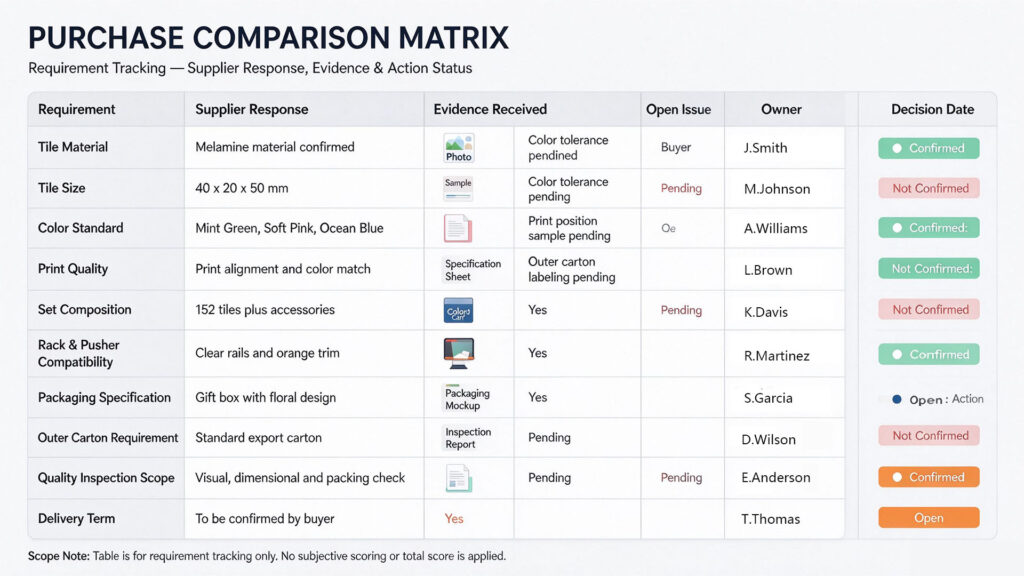
Once configuration and approval criteria are clear, ask each supplier to quote against the same revision of the brief. The response should distinguish sample costs, tooling or artwork work if any, unit price basis, packaging and accessory inclusions, order quantity assumptions, payment milestones, shipping terms, and estimated production stages. Treat every commercial figure and date as project-specific until confirmed in writing.
Use a simple comparison matrix: requirement, supplier response, evidence received, open issue, owner, and decision date. Mark “not confirmed” rather than awarding a point for a confident verbal promise. A supplier with a slightly higher headline quote may be easier to manage if its configuration, exceptions, and quality criteria are unambiguous; a low quote with missing accessories is not equivalent.
Warning Signs That Call for More Evidence
- The supplier quotes before confirming the component list or target customization level.
- A sample is attractive, but no one can identify the approved artwork revision.
- Terms such as “premium acrylic” or “retail ready” have no testable definition.
- Certificates are shown without entity, scope, validity, or product relevance.
- Packaging and accessories are discussed but absent from the price basis.
- No one owns a change request or a nonconforming-goods decision.
These are prompts for clarification, not automatic proof that a supplier is unsuitable. Ask for the missing record and decide based on the answer.
FAQ for American Mahjong Buyers
Do I need a factory that makes every component in-house?
Not necessarily. You need a clear owner for each process, consistent specifications, documented approvals, and accountability for the delivered set. Verify any subcontracted step that materially affects appearance, function, safety, or timing.
What should I send before asking for a quote?
Send the sales channel, intended buyer, approximate order volume by design, expected set components, customization level, reference images or artwork, packaging needs, target market, and open questions. Distinguish firm requirements from concepts that still need development.
Is one approved tile enough to approve a bulk set?
No. Approve the relevant tile assortment and the complete packed configuration, including accessories and print materials, against a written specification. The approved reference should have an identifiable revision.
How do I compare a manufacturer and a trading supplier?
Evaluate the actual process map and responsibility chain rather than a label. Ask who controls production records, resolves defects, approves substitutions, and handles the finished set. Either model can work if roles and evidence are clear.
Should I request a children’s-product certificate for every Mahjong set?
No blanket conclusion is appropriate. Product classification depends on intended use and presentation, and applicable testing and certification follow that determination. Review the CPSC guidance and have your compliance team assess the specific product.
Ready to Discuss a Specific Project?
Send TOPRAY your target market, sales channel, design references, approximate quantities by style, desired components, packaging concept, and the decisions you still need help resolving. The team can review the brief and discuss project feasibility, sample scope, and the information required for a comparable quotation. Start through the customization inquiry page; no specification, price, minimum, or delivery date is implied by this guide.