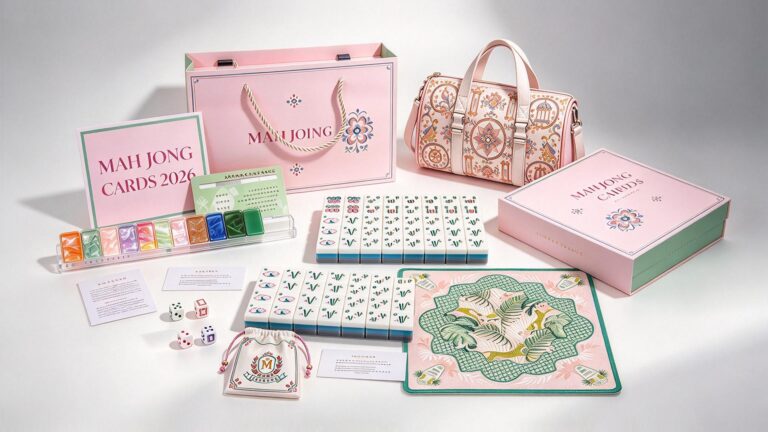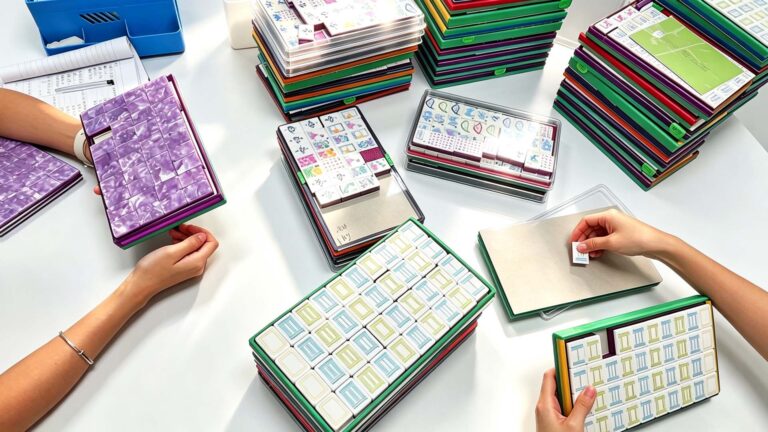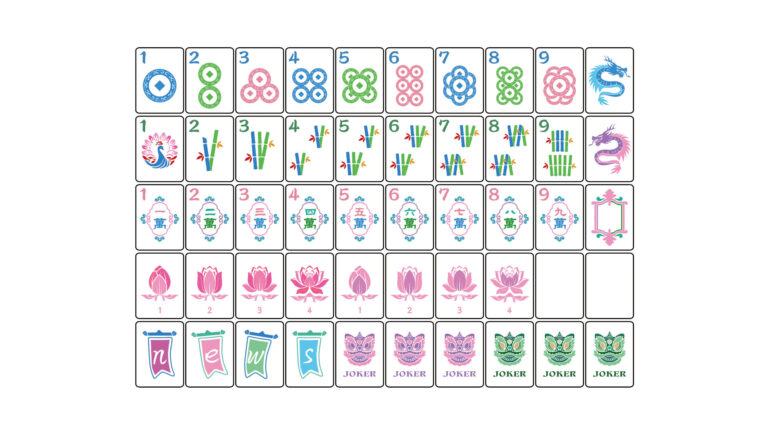

American Mahjong set packaging has to do more than look appealing in a product photo. A retailer needs a package that tells a shopper what is included, keeps each component organized, survives the intended distribution route, and can be received and checked without guesswork. Those are different jobs. A beautiful box does not automatically make a set ready for e-commerce fulfillment or a store shelf.
This guide is for U.S. retailers, gift brands, distributors, and sourcing teams comparing packaging proposals before a bulk order. It is a buyer-side checklist, not a claim that any particular TOPRAY package has passed a transport test. Use it to turn a packaging concept into a written approval standard, then confirm the actual options and feasibility with your supplier.
Start with the sales channel, not the box shape
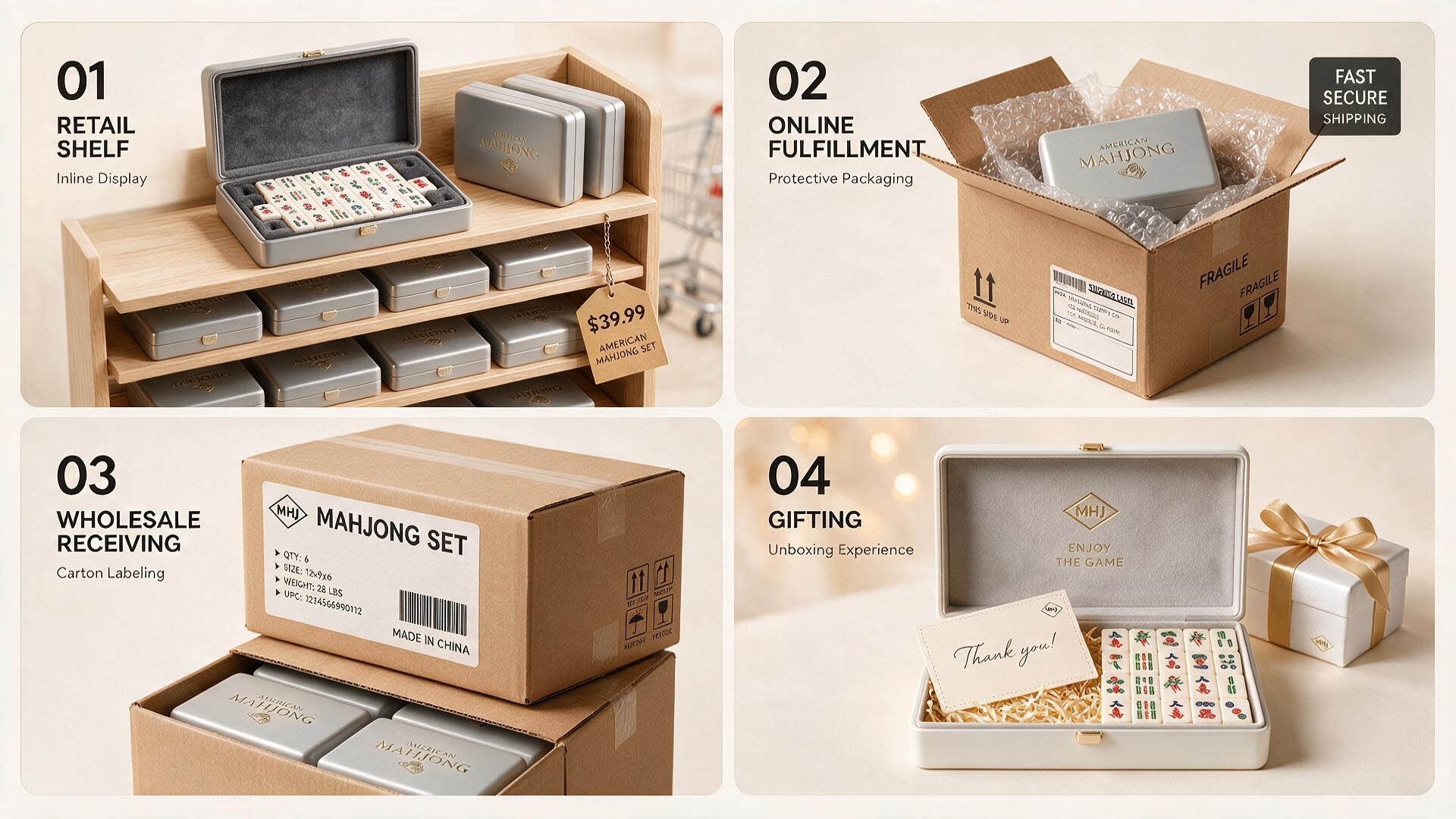
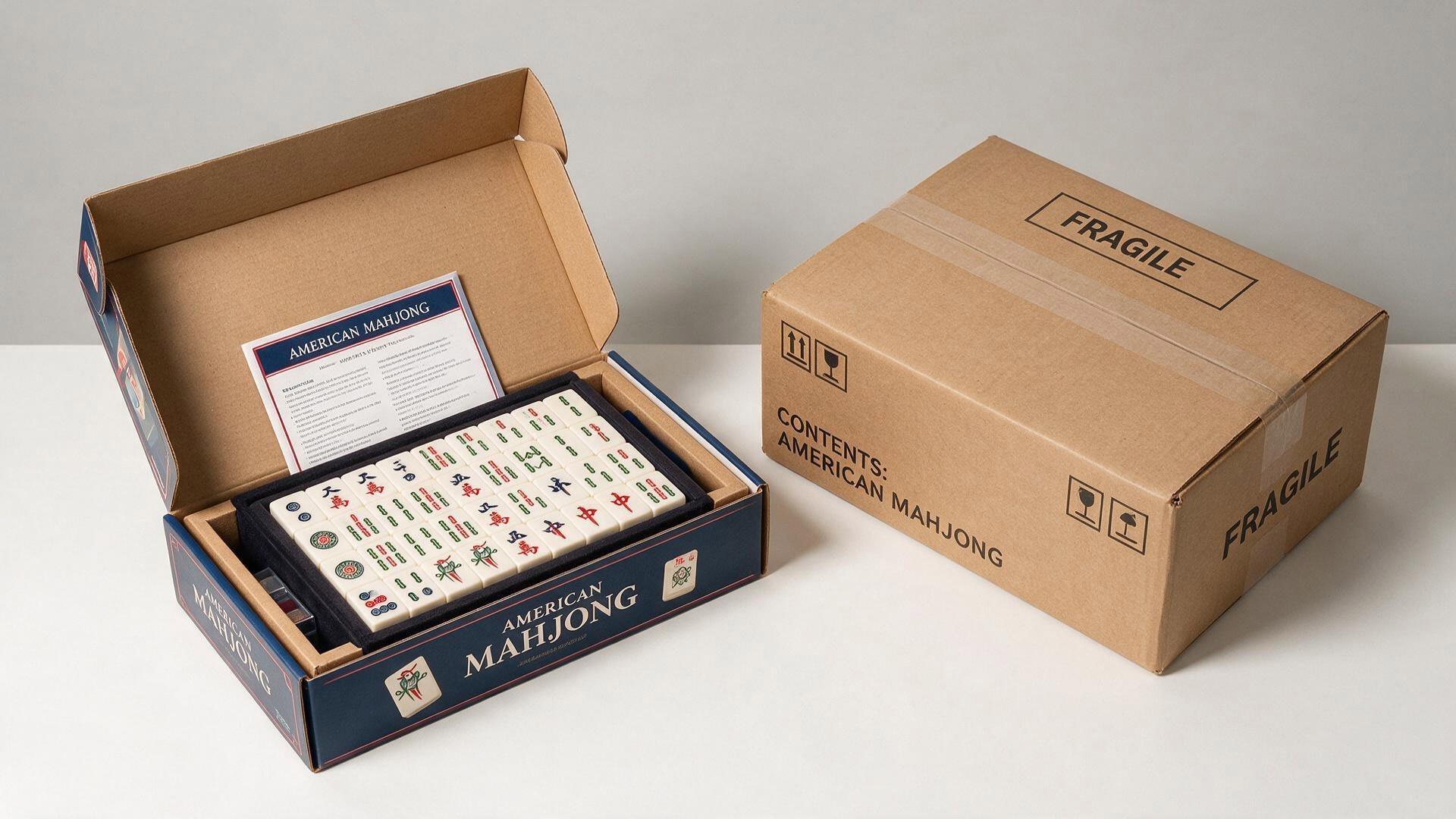
Before requesting a dieline or quote, write down where the set will be sold and how it will travel. A boutique display, a gift program, a wholesale case pack, and a direct-to-consumer parcel do not impose identical requirements. The store buyer may prioritize shelf visibility and quick identification; the e-commerce team may prioritize parcel protection, returns, and easy picking. A club buying sets for group use may care more about repeated storage than a gift-ready unboxing experience.
Give the supplier one channel brief per proposed SKU. Note whether the consumer-facing package is also the carrying case, whether a separate shipping carton is expected, and whether the retail unit may be sold individually online. If one set needs to serve several channels, request a packed-sample review for each distribution configuration rather than assuming the retail carton alone is sufficient.
- Retail shelf: identify the front-facing panel, orientation, footprint, and required on-pack information.
- Online fulfillment: define the outer shipper, internal restraint, and what a customer should find intact on arrival.
- Wholesale receiving: define case quantity, SKU identification, and carton-marking instructions supplied by the buyer.
- Gifting: decide whether the retail package is intended to be retained or discarded after opening.
For assortment and purchase planning beyond packaging, see TOPRAY’s wholesale American Mahjong page.
Lock the contents list before designing the insert
A package should be built around the approved set, not around a photograph of a preliminary sample. Record the tile configuration and every included accessory in the purchase specification. Different American Mahjong offers can include different combinations of racks, pushers, dice, bags, cases, or printed materials. Do not let an image, a generic “complete set” label, or a supplier’s standard configuration substitute for a signed contents list.
Create a component-to-compartment map
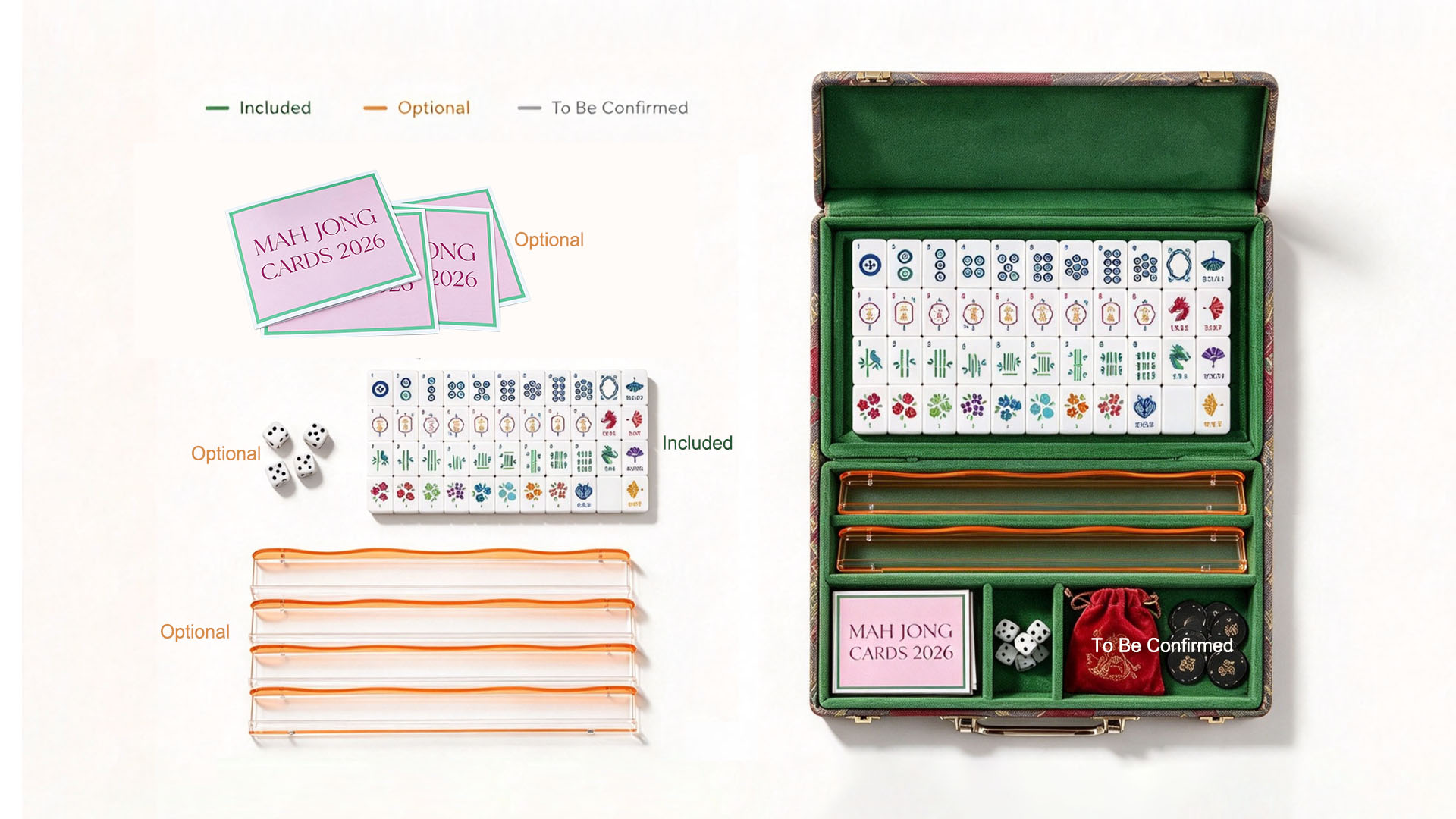
Lay out the full proposed set and mark the position of each component inside the package. Identify anything that could move, rub, or put pressure on another surface in transit. Then compare the arrangement after closing and reopening the package. The map should show not only where each part goes, but how a warehouse worker or customer can return it to its place. Keep the unboxing sequence simple enough to expose a missing accessory before the carton is discarded.
If racks and pushers are optional, treat them as a separate bill-of-materials decision rather than implying every set includes them. TOPRAY’s foldable American Mahjong rack and pusher gives buyers a current 2-in-1 product reference; availability and exact compatibility must be confirmed for the proposed set.
Separate the retail presentation from transit protection
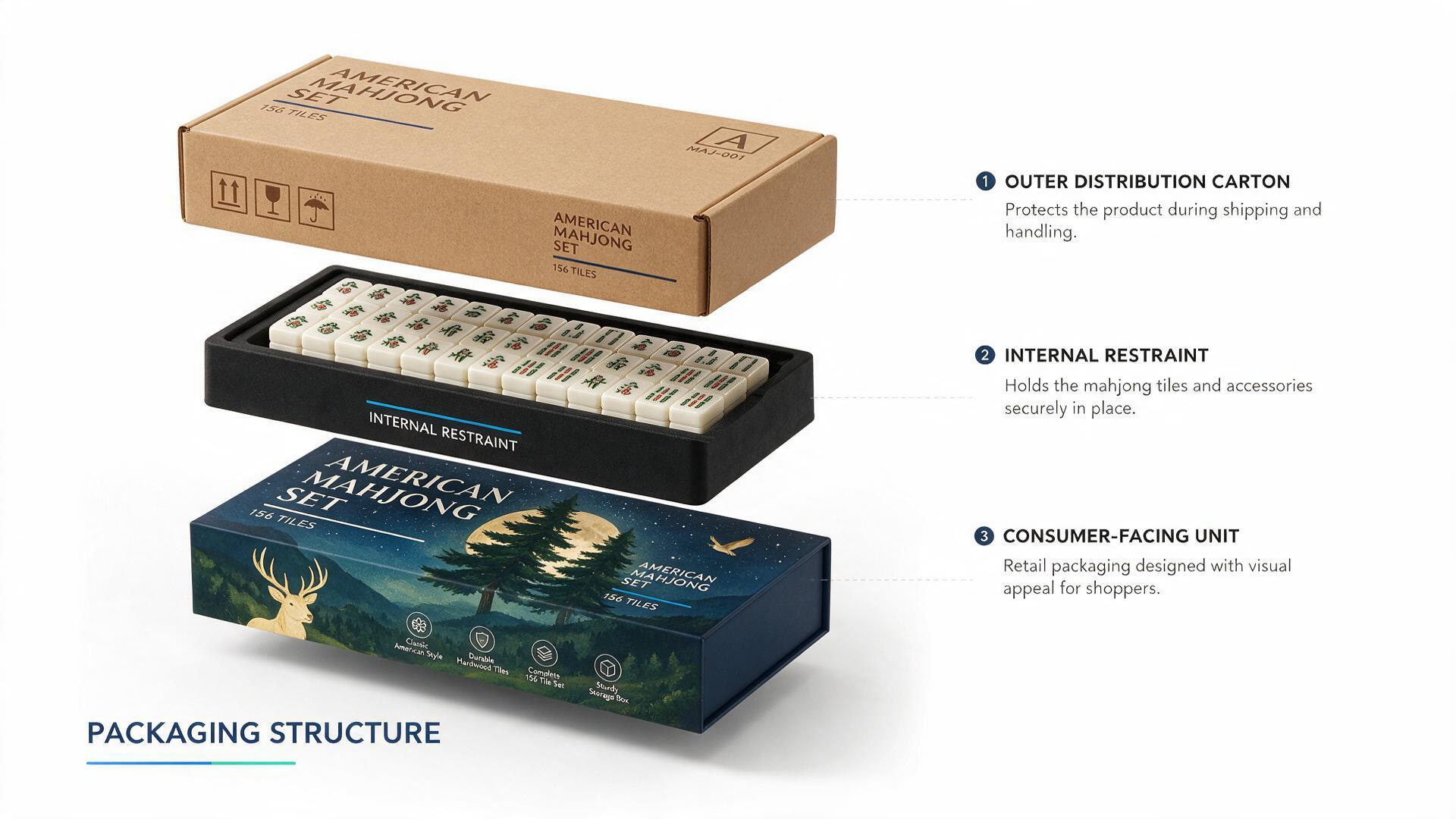
Three layers may be involved: the product’s internal restraint, the consumer-facing unit, and the outer distribution carton. They should be assessed independently. A printed sleeve can communicate a brand story but may provide little structural protection; a protective outer carton may ship well but not present attractively on a shelf. The right combination depends on the approved design, weight, accessories, and fulfillment route, so do not copy a packaging specification from a different SKU.
Review contact points, movement, and closure
During packed-sample approval, check whether tile faces and edges touch hard accessories, whether a tray can shift inside the box, whether closures stay secure after repeated opening, and whether printed surfaces scuff where components rub. Photograph the packed state before and after handling. Record observed damage and the corrective change, not just a pass/fail label.
For parcel shipments, follow the selected carrier’s current packaging instructions. UPS’s U.S. packaging guidance is a useful reference for appropriate cushioning, sealing, and how a package is prepared for shipping. Carrier guidance informs the transport plan; it does not certify that a particular Mahjong set is protected. If formal distribution testing is required by a retailer, agree on the applicable protocol and pass criteria before testing.
Specify a practical receiving unit
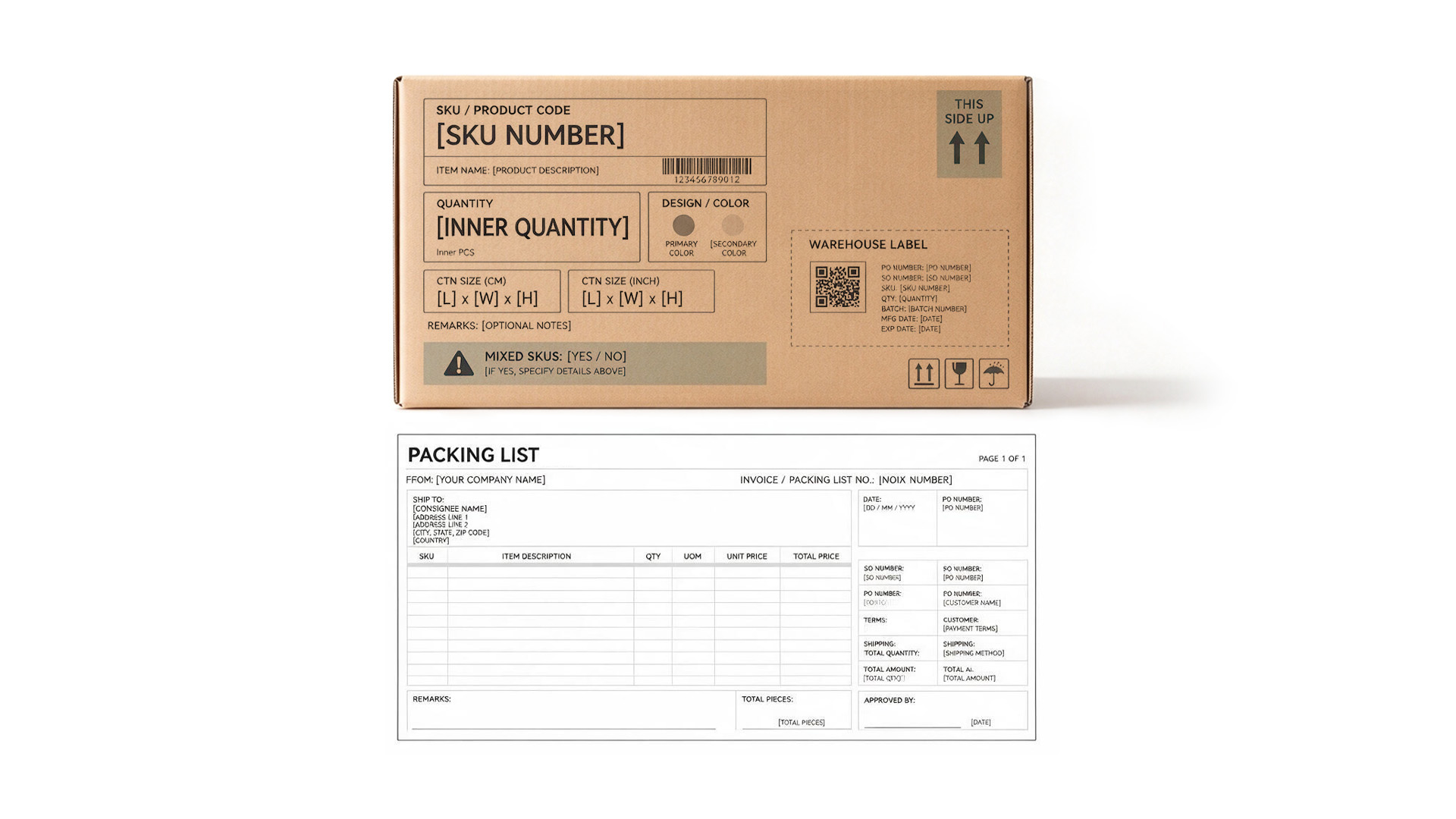
Ask how many sellable sets go into each master carton, how the cartons will be marked, and which side should face a warehouse label. Do not invent a fixed case pack at the article stage. A proposed quantity should be tested against actual packed dimensions, weight, and the buyer’s receiving process. The buyer should also decide whether mixed designs or colors may share a carton; if they do, the marking and packing list need to make the mix unambiguous.
Make the outside answer the shopper’s first questions
The front and side panels should enable an accurate purchase decision. Depending on channel and design, the buyer may need a product name, view of the tile style, a concise list of included components, a SKU or barcode area, and an orientation that works on the shelf. Space for retailer labels should be agreed before artwork approval. Claims such as “premium,” “complete,” or “gift-ready” should be reviewed against the actual contents and presentation, not used as a substitute for specific information.
The unboxing experience matters too: can the set be opened without damaging the case, are small pieces contained, and are instructions or care notes easy to find? A helpful package makes post-purchase use and returns clearer. Photograph all sides of the assembled sample, the fully opened set, the components in their compartments, and the closed set after the components have been put back.
A retail packaging checklist is different from a general product-development brief. Buyers building a new brand can also read our custom American Mahjong product-development guide for the earlier design and sample stages.
Control artwork and claims before printing
Packaging approval should identify a single artwork version, a single dieline version, and the owner of final sign-off. Ask for a marked proof showing folds, glue areas, barcode placement, and any text close to a cut or crease. Compare the proof with the assembled sample, since an attractive flat PDF can hide a panel that becomes unreadable once folded. Check that the product image and included-components statement match the approved physical sample.
Review U.S. audience and environmental language carefully
If packaging, advertising, or imagery represents a product as primarily intended for children 12 or younger, classification and applicable safety obligations require specific review. The U.S. Consumer Product Safety Commission’s children’s-product guidance explains that packaging and promotion are among the factors considered; an age label alone does not settle classification. Have the importer or qualified compliance adviser evaluate the actual product, audience, and claims rather than assuming that every Mahjong set has the same requirements.
Environmental claims also need evidence. The FTC’s Green Guides summary cautions against broad unqualified “eco-friendly” claims and discusses conditions for recyclable and recycled-content representations. If a buyer wants such wording on a box, obtain the material and claim substantiation first. A supplier quotation for paperboard by itself is not proof that the finished multi-material package is recyclable in every U.S. community.
These sources are decision aids, not a substitute for legal review. The final labeling, intellectual-property clearance, and market-specific compliance decision belongs to the responsible brand or importer.
Approve a physical packed sample, not only a rendering
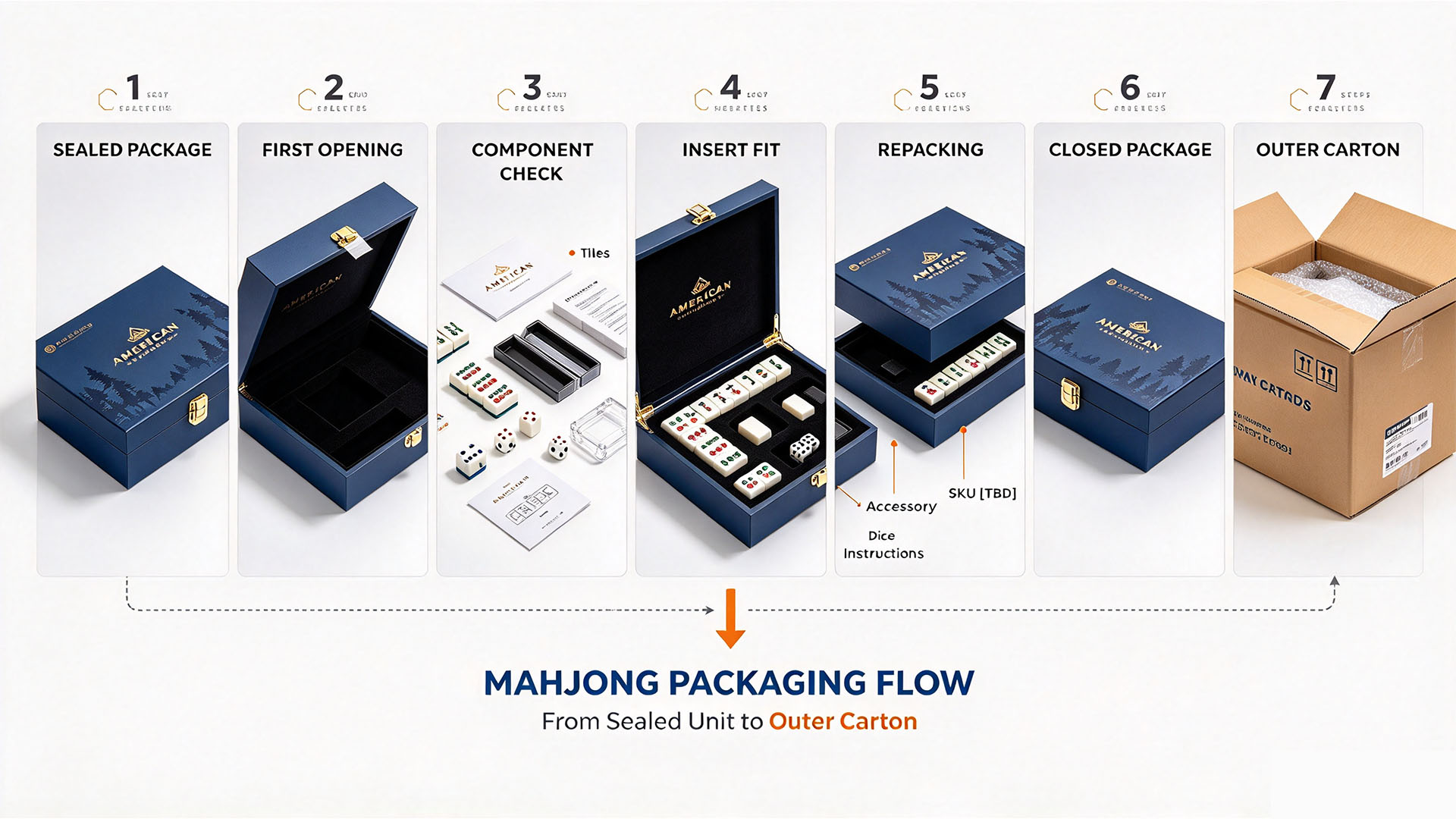
Ask for a sample assembled with the actual intended packaging structure, components, artwork state, and closure. If a placeholder is used, list exactly what remains unapproved. Review a complete consumer unit and, when relevant, a packed outer carton. A reliable approval record lets a different team member compare a later production sample with the same baseline.
- Visual review: compare color, print legibility, folds, finishes, and all exterior panels against the approved artwork.
- Contents review: count and identify all approved components; check the wording and illustrations on the package against the contents.
- Fit review: close, reopen, and repack the set; note loose parts, friction, and any closure problems.
- Distribution review: evaluate the completed shipping configuration for the chosen route and any buyer-required test.
- Document control: record photographs, the approved sample or reference, revisions, sign-off date, and any outstanding exceptions.
Where physical tiles are part of the approval, use a separate inspection checklist for surface, printing, and edge quality. Our acrylic Mahjong tile inspection guide covers that product-level review; a good package cannot compensate for an unapproved tile sample.
Send a quote-ready packaging brief
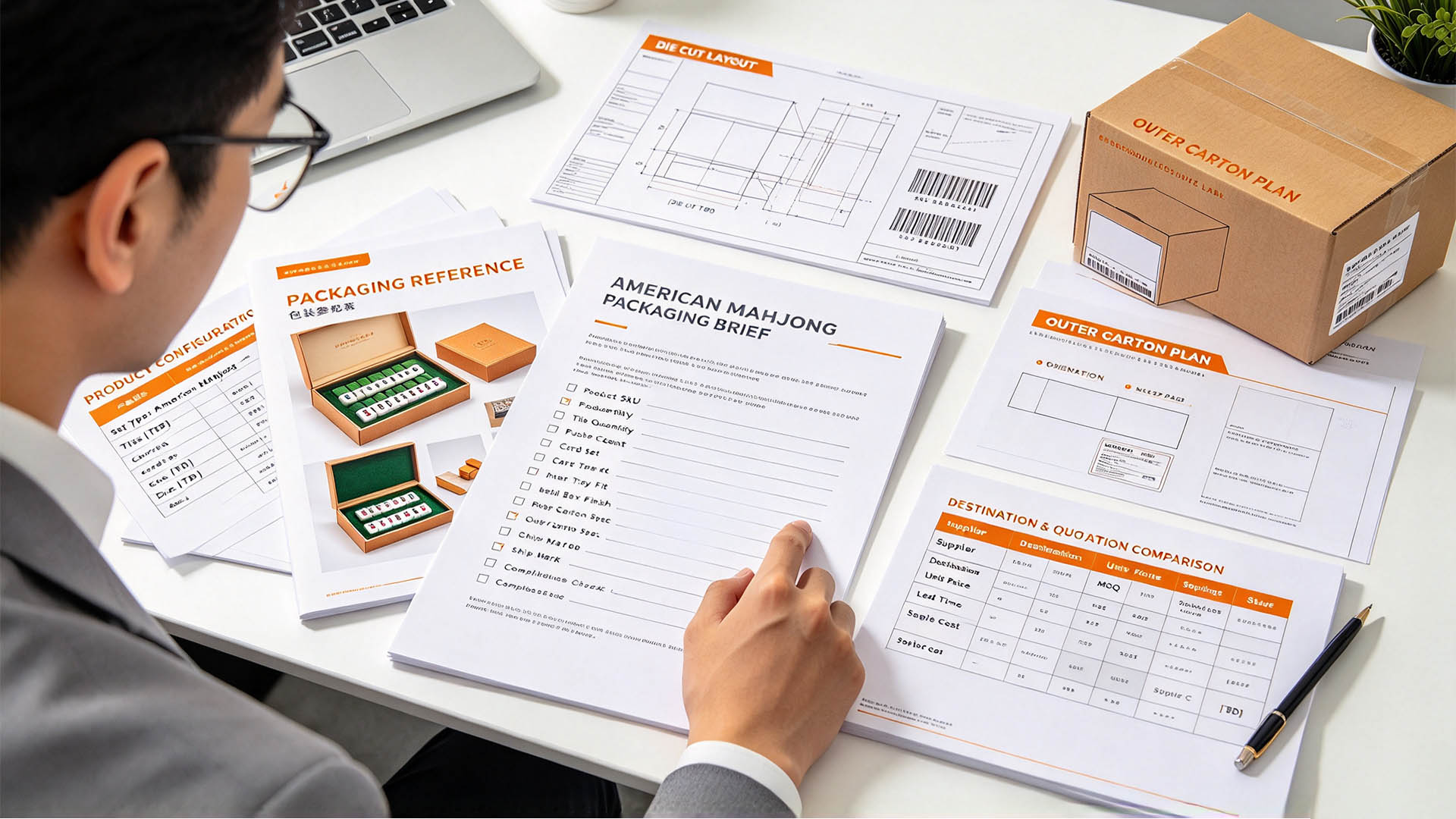
A quote request becomes more comparable when each supplier prices the same scope. Include the set configuration, target channel, quantity by SKU, destination, reference images, desired packaging format, artwork status, barcode and label ownership, and the shipping configuration you expect to buy. Specify whether a printed consumer box, reusable bag or case, insert, instructions, and outer cartons are included or quoted separately. Ask which items require a physical approval sample and which changes would trigger a new quotation.
For a buyer comparing proposals, a short side-by-side table can prevent a false “cheapest supplier” conclusion. Use the same columns for every offer: consumer unit, internal restraint, accessory packing, outer carton, artwork proof, sample approval, and exclusions. Leave unconfirmed values blank until they are answered in writing. Freight, duty, testing, and channel-specific labeling may sit outside a basic factory price, so assign ownership explicitly.
If you’re preparing a TOPRAY inquiry, send the channel, contents list, quantity by version, preferred package reference, and destination through the contact page. TOPRAY can review your project brief and discuss feasible packaging options; the final structure, pricing, timing, and any testing requirements must be confirmed for the specific order.
FAQ: American Mahjong set packaging for retailers
Does a retail gift box also work as a shipping box?
Not automatically. Evaluate the consumer-facing presentation and the outer shipping configuration separately against the intended route. A parcel channel may call for additional restraint or an outer carton.
What should be approved before packaging is printed?
Confirm the actual contents, dieline and assembled structure, final artwork version, product claims, barcode or retailer-label space, and a physical packed sample. Record who signs off and any exceptions that remain.
Should every American Mahjong set include racks and pushers?
No universal configuration should be assumed. Specify the exact components per SKU in the quotation and check that the package artwork represents only what is included.
Can we call a package recyclable because it uses paperboard?
Do not assume so. Consider coatings, windows, adhesives, inserts, and the claim’s substantiation. Have the responsible brand review the FTC guidance and the actual material composition before printing.
What should a bulk buyer provide to request a packaging quote?
Share a contents list, target sales channel, quantity by design, destination, visual reference, required pack-out, and artwork or barcode status. Ask the supplier to identify assumptions and exclusions in writing.