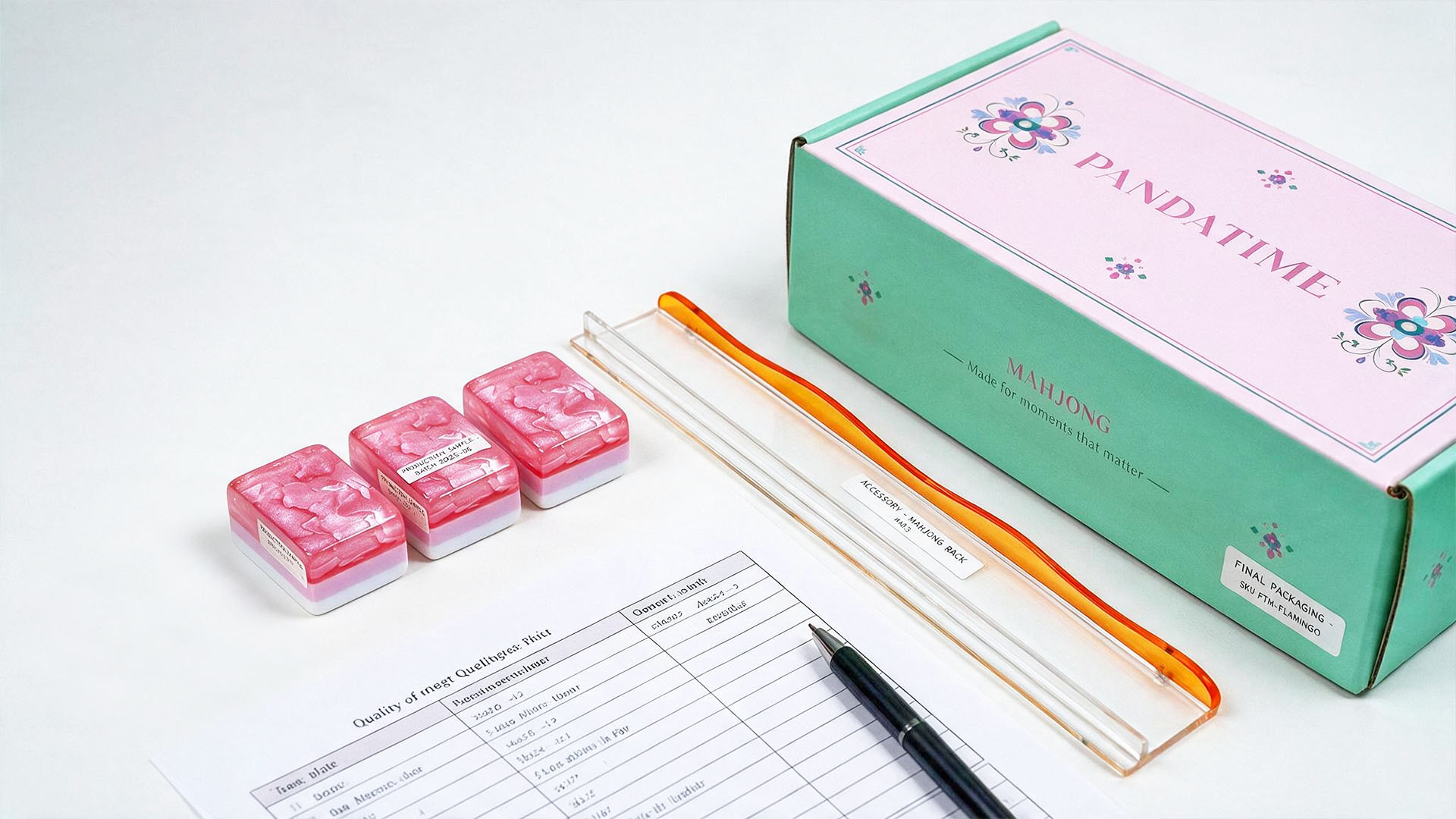

For a brand planning a new American Mahjong line, choosing a sourcing model determines who defines the product, how much development work is required, what must be approved, and where commercial risk sits. Buyers often use “OEM,” “ODM,” “private label,” and “custom” as if they mean the same thing. Suppliers may also define them differently.
A better approach is to describe the work each party will perform. This guide explains how OEM and ODM American Mahjong projects differ, how to select the right path, and what a supplier needs before it can evaluate feasibility. It is written for retailers, established e-commerce brands, distributors, gift companies, and product teams preparing a serious sourcing project.
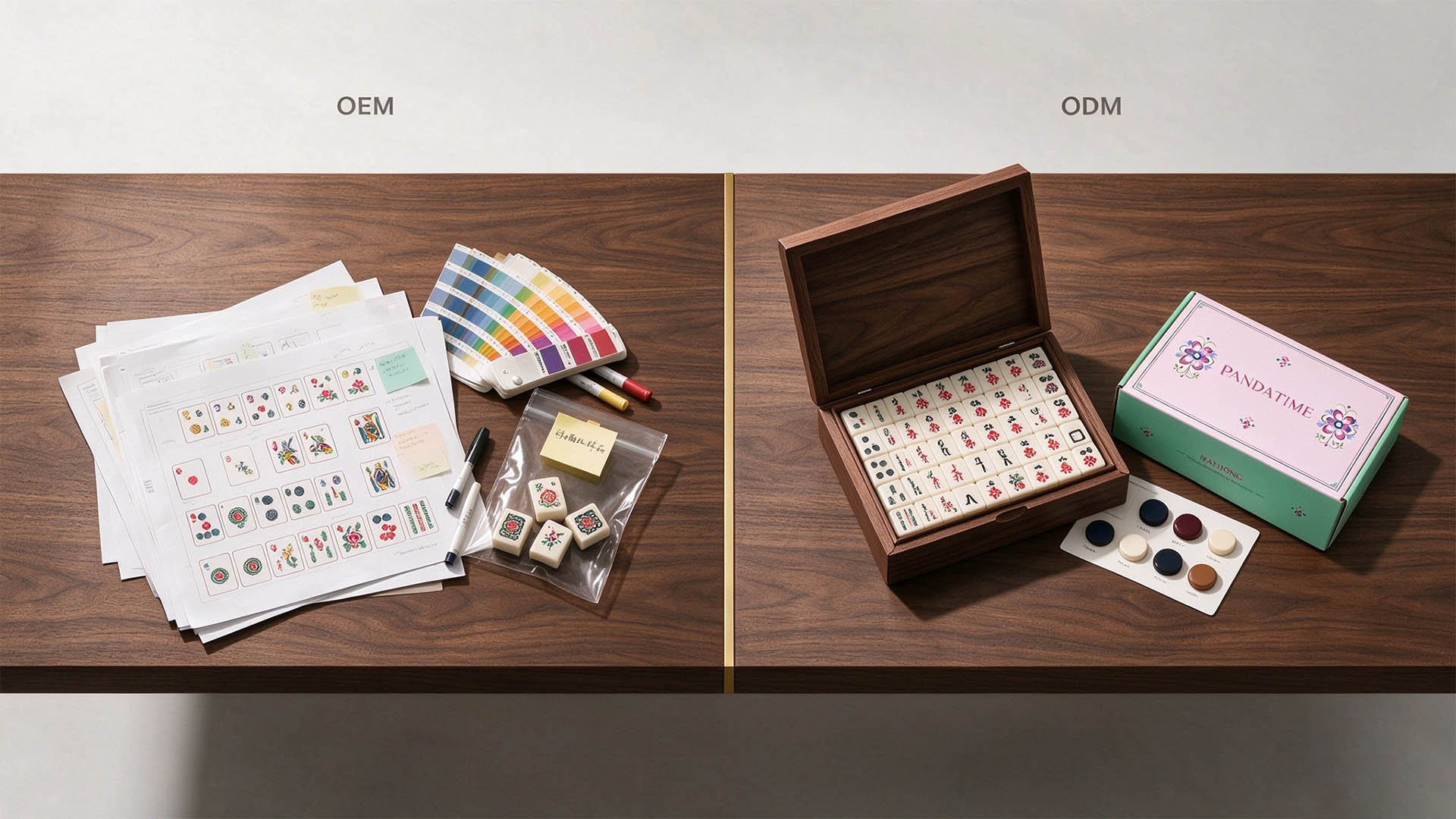
What OEM and ODM Mean in American Mahjong Sourcing
OEM: the buyer leads the product definition
In an OEM American Mahjong project, the buyer normally provides a defined product brief. It may include tile configuration, artwork, color references, material direction, packaging, accessories, labeling, and acceptance criteria. The supplier reviews manufacturability, develops samples, and produces the approved specification.
OEM is generally a better fit when a brand has a differentiated concept and wants tighter control. It also requires complete inputs. A mood board alone is not a production brief; the supplier still needs controlled artwork, component decisions, quantity assumptions, and a clear approval process.
ODM: the supplier provides a starting platform
In an ODM project, the supplier begins with an existing or previously developed product platform that can be adapted. The buyer may select colors, artwork, packaging, or a defined combination of components without redesigning the complete set from the beginning.
This can reduce development uncertainty because the starting structure is understood. However, “existing platform” does not mean copying another brand’s protected design. Buyers should confirm which elements can change, which remain fixed, and who owns or may use the resulting artwork and product features.
Private label and light customization
Some projects sit between wholesale and full OEM development. A buyer may select an existing product, add its logo, change the package, or choose from available color and component options. This is often called private label or light customization.
The label matters less than the approved scope. Identify whether the project changes only branding, changes visual elements, or changes product structure. TOPRAY’s custom American Mahjong service provides a starting point for discussing the required development level.
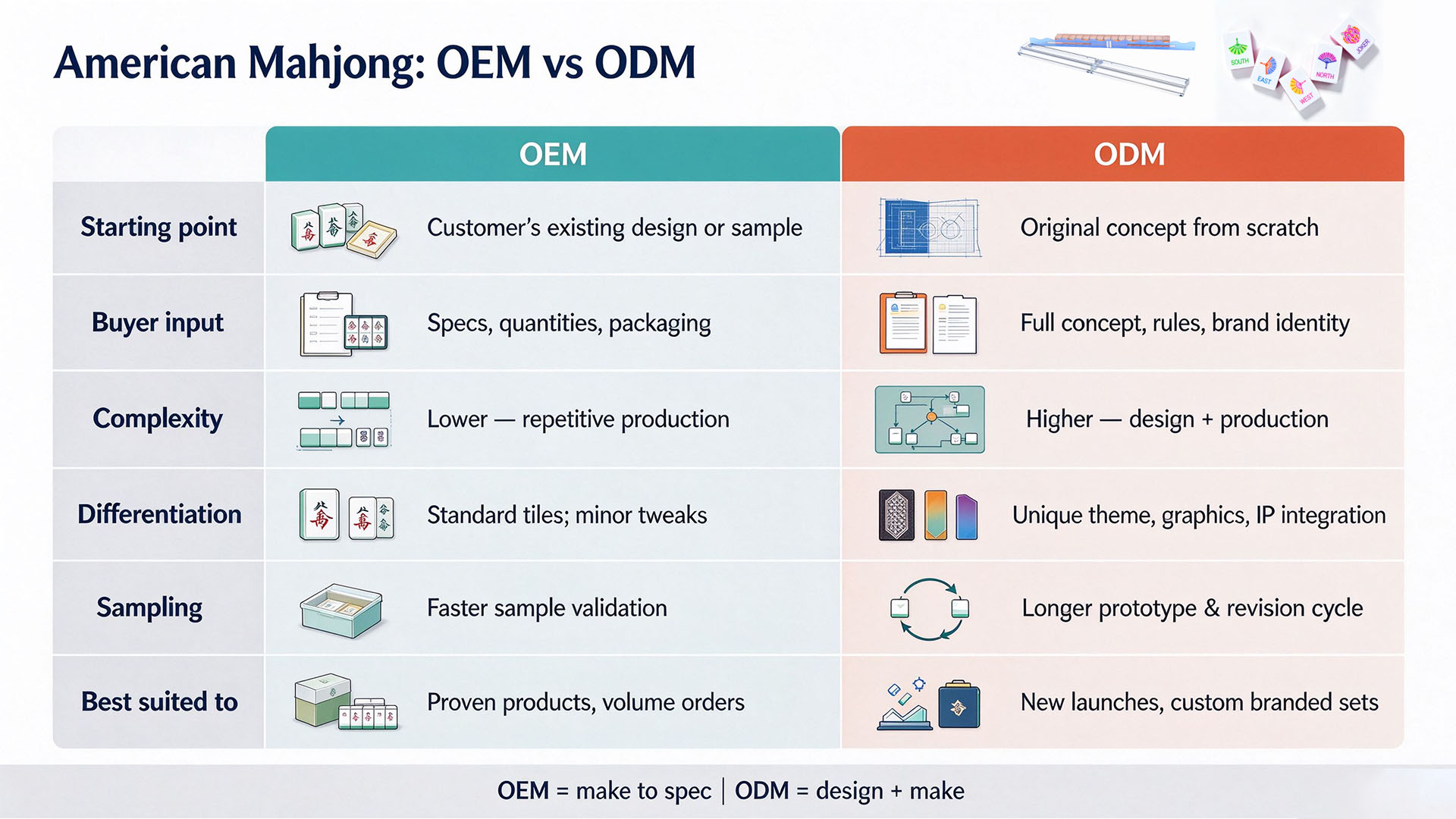
OEM vs. ODM American Mahjong: A Practical Comparison
| Decision Area | OEM Project | ODM Project |
|---|---|---|
| Starting point | Buyer-defined brief or original concept | Supplier-developed platform or existing structure |
| Buyer input | Detailed specifications, artwork, standards, and approvals | Selections and adaptations within an agreed range |
| Complexity | Usually higher because more elements need confirmation | Usually lower when the base product remains unchanged |
| Differentiation | Potentially greater, depending on scope | Often focused on artwork, color, packaging, or assortment |
| Sampling | May require several controlled review stages | Can be more direct if the platform is already understood |
| Best suited to | Brands with a clear concept and development resources | Buyers wanting a defined, adaptable starting point |
These are planning tendencies, not promises about cost, lead time, or minimum order quantity. Those depend on the design, materials, tooling, packaging, order structure, and capacity. Ask the supplier to describe the proposed project route instead of relying only on the OEM or ODM label.
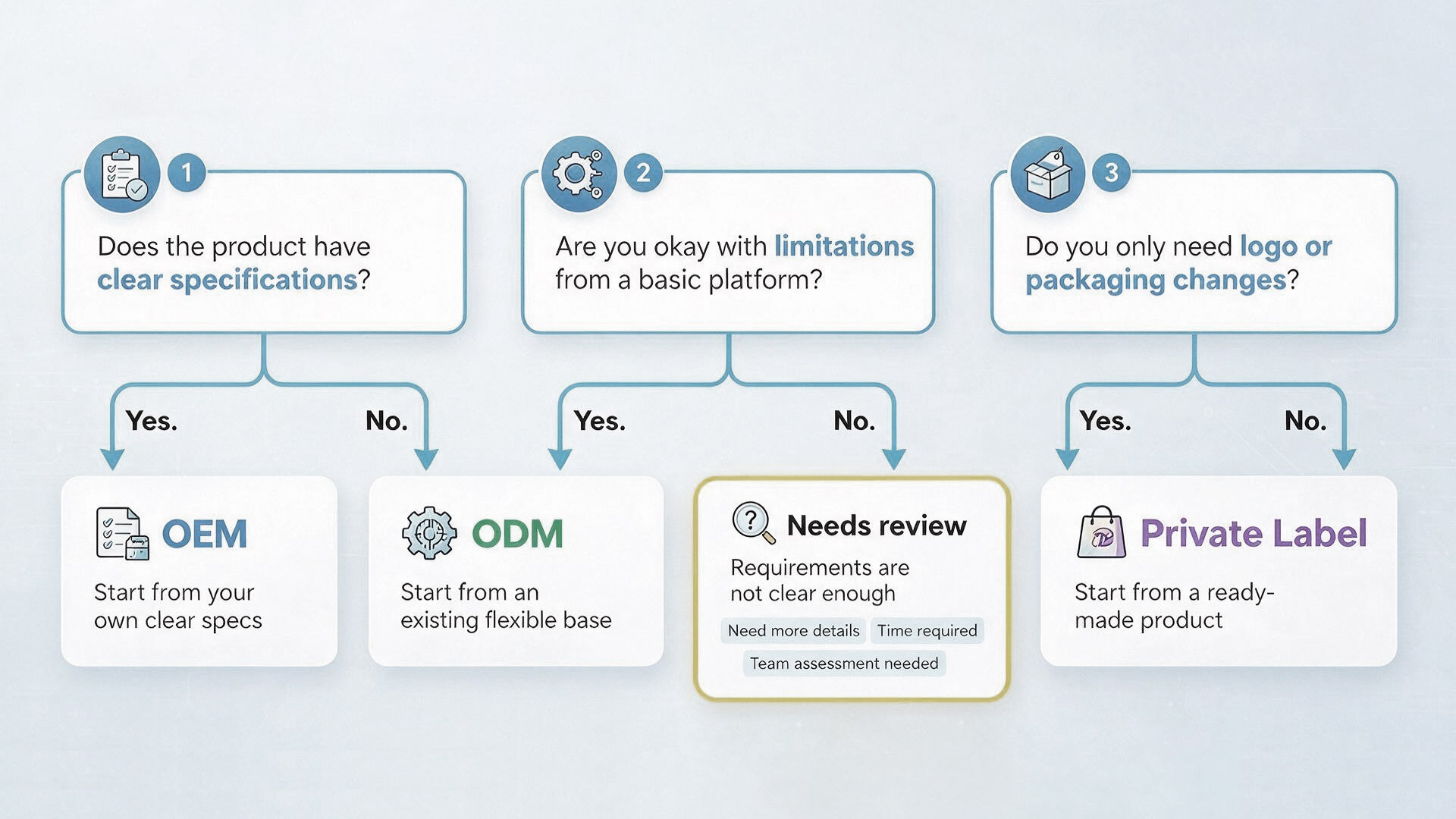
How to Choose the Right Sourcing Model
Define the commercial objective
A sourcing model should support a commercial purpose. A specialty retailer may need a seasonal collection. A gift brand may prioritize presentation. A club supplier may care more about durability, component completeness, storage, and repeat ordering. Write a one-sentence objective identifying the customer, channel, positioning, and reason the set is different.
Measure how much is already defined
Choose OEM when the product is substantially defined and the buyer can manage decisions. Choose ODM when the buyer wants a proven starting structure and can work within agreed boundaries. Consider private label when the core product can remain unchanged and branding or packaging provides enough differentiation.
If the team has not decided the set configuration, target channel, artwork direction, or packaging format, the project is not quote-ready. Use TOPRAY’s custom American Mahjong product development guide to organize inputs before requesting commercial terms.
Decide which elements must remain exclusive
List the assets that matter: name, logo, tile artwork, back pattern, color palette, package graphics, instructions, photography, and original structural features. State who supplies each asset and whether exclusivity is required.
For U.S. trademark planning, the USPTO trademark basics explain names and logos and link to search and registration resources. A factory can manufacture approved files, but the brand should complete its own rights review and document authorized use.
Build a Quote-Ready OEM or ODM Brief
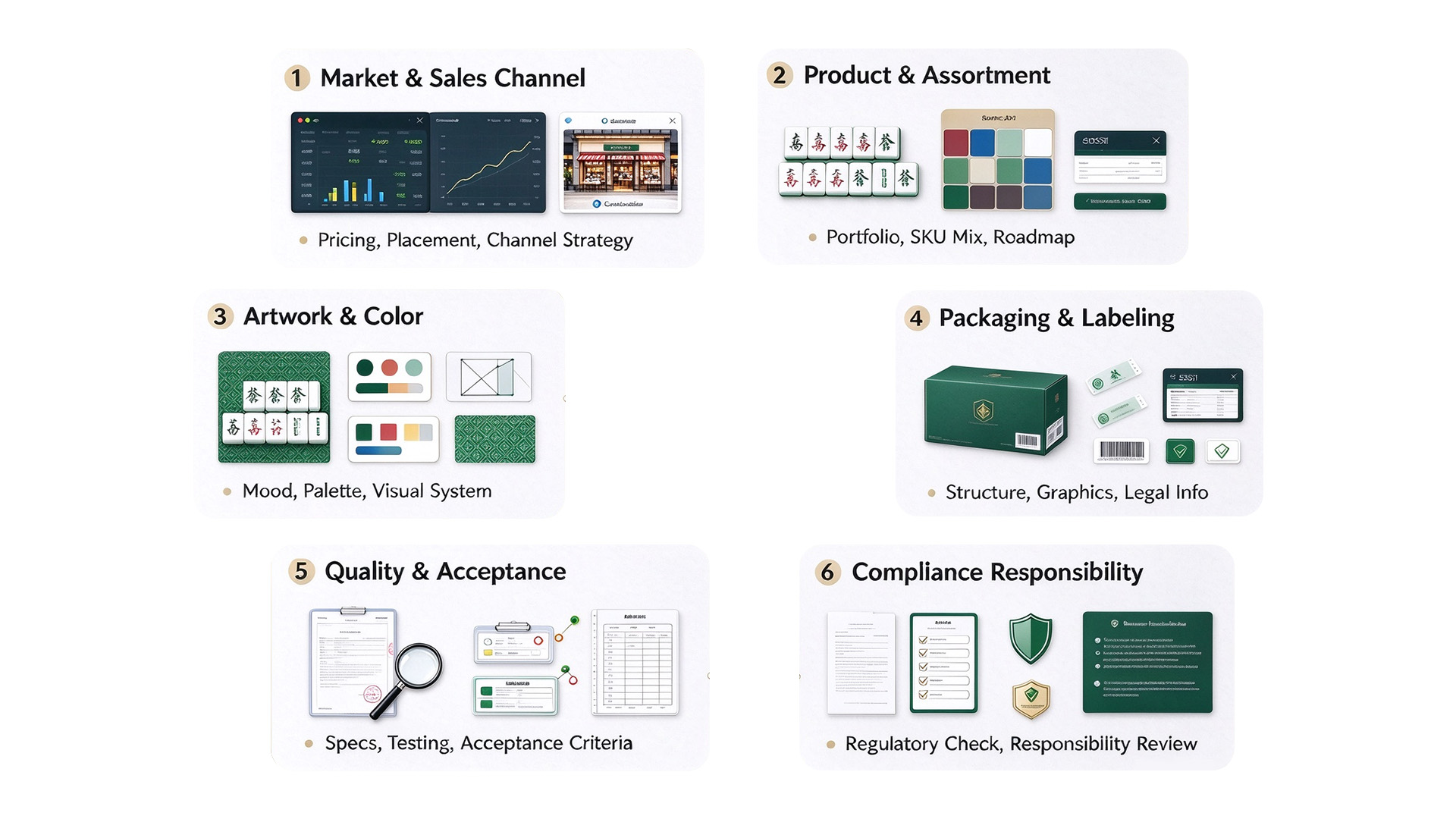
A supplier cannot responsibly evaluate a project from a reference image and target price alone. A useful brief should reduce assumptions in six areas.
1. Market and sales channel
- Target country or countries
- Retail, e-commerce, wholesale, club, gifting, or another channel
- Intended user and age positioning
- Target launch window, marked as a goal rather than a confirmed production date
2. Product and assortment
- Required tile configuration and optional tiles
- Material and finish direction
- Included accessories and whether each is standard or optional
- Desired set, bundle, or collection structure
- Estimated quantity by design, color, and packaging version
Do not assume a rack, pusher, bag, mat, dice set, or printed item is included. Treat every component as a separate specification line. TOPRAY’s wholesale American Mahjong page provides the commercial route for sets and related accessories.
3. Artwork and color control
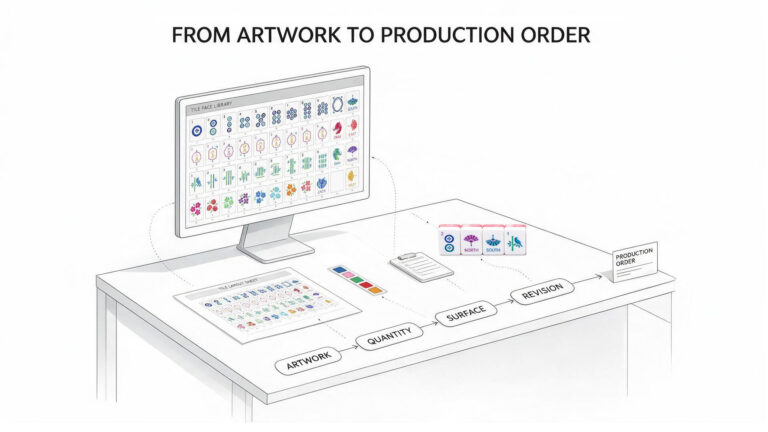
- Editable artwork in the requested format
- Font licenses and outlined text
- A numbered map showing every design location
- Physical or standardized color references where color accuracy matters
- A version number and approval owner for each file set
Screen appearance is not a reliable final color standard. Define how color will be reviewed on the actual material and under agreed viewing conditions. Keep comments tied to a specific sample and artwork version.
4. Packaging and labeling
Specify the retail unit, storage method, inserts, instructions, barcode location, warning or age information, carton marks, and shipping environment. Packaging must protect a complete set while supporting receiving, merchandising, and use. If U.S.-origin claims are considered, review the FTC’s Made in USA guidance before approving artwork.
5. Quality and acceptance standards
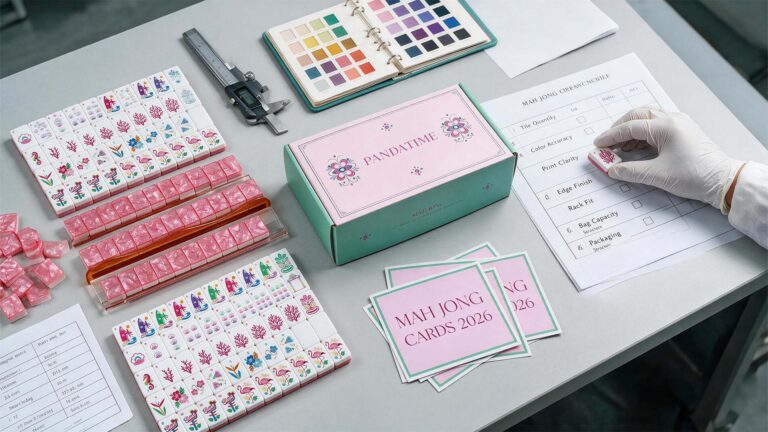
Convert “premium quality” into observable checks: component count, artwork placement, print clarity, edge finish, surface condition, color tolerance, accessory fit, packaging integrity, and barcode readability. TOPRAY’s acrylic Mahjong inspection guide offers a detailed framework for physical samples.
A quality-management certificate may support evaluation, but it does not replace a product-specific control plan. The ISO 9000 family overview explains the purpose of quality-management systems. Verify the scope, issuing body, and validity of any certificate presented.
6. Compliance responsibility
Product classification depends on how an item is designed, marketed, labeled, and sold. Identify the destination market and intended user early, then obtain qualified advice for the specific product. The CPSC business education library provides starting points for regulations, testing, certification, and labeling. This article is operational guidance, not legal advice.
Use a Controlled Sample Approval Process
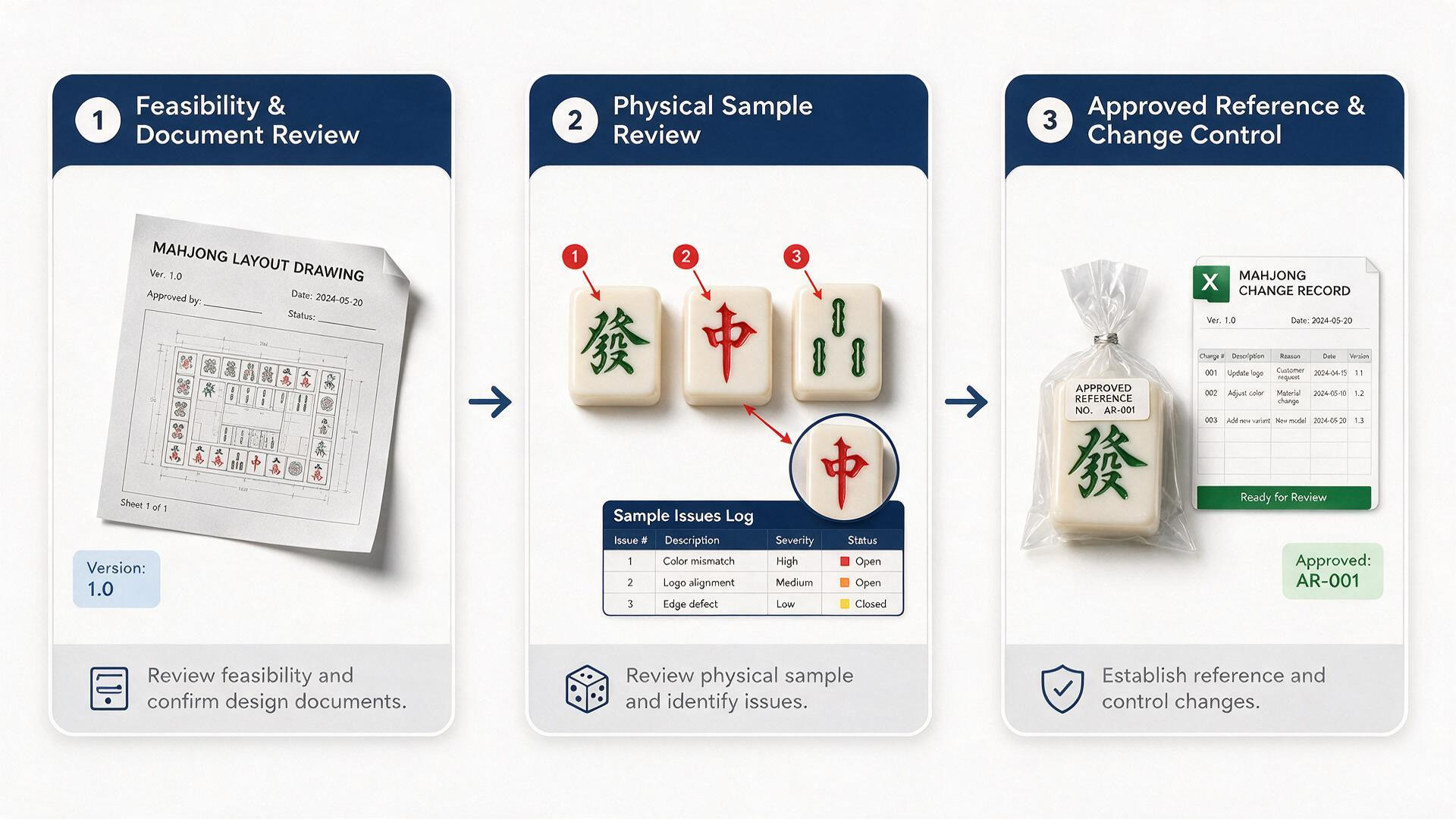
Stage 1: feasibility and document review
Confirm which requests are feasible, which require alternatives, and which remain open. Record the proposed material, structure, finish, artwork version, packaging direction, and components. A responsible response should identify assumptions instead of silently filling gaps.
Stage 2: physical sample review
Review the sample against the brief, not from memory. Photograph each issue, identify its location, describe the expected result, and assign a decision: approved, revise, or pending. Separate functional issues from visual preferences so the next round has clear priorities.
Stage 3: approved reference and change control
Preserve an approved reference—often called a golden sample—with final artwork, component list, packaging files, and acceptance notes. Any later substitution or change should be disclosed and approved before bulk production, especially when several colors or designs share similar components.
Evaluate the Supplier Beyond the Sample
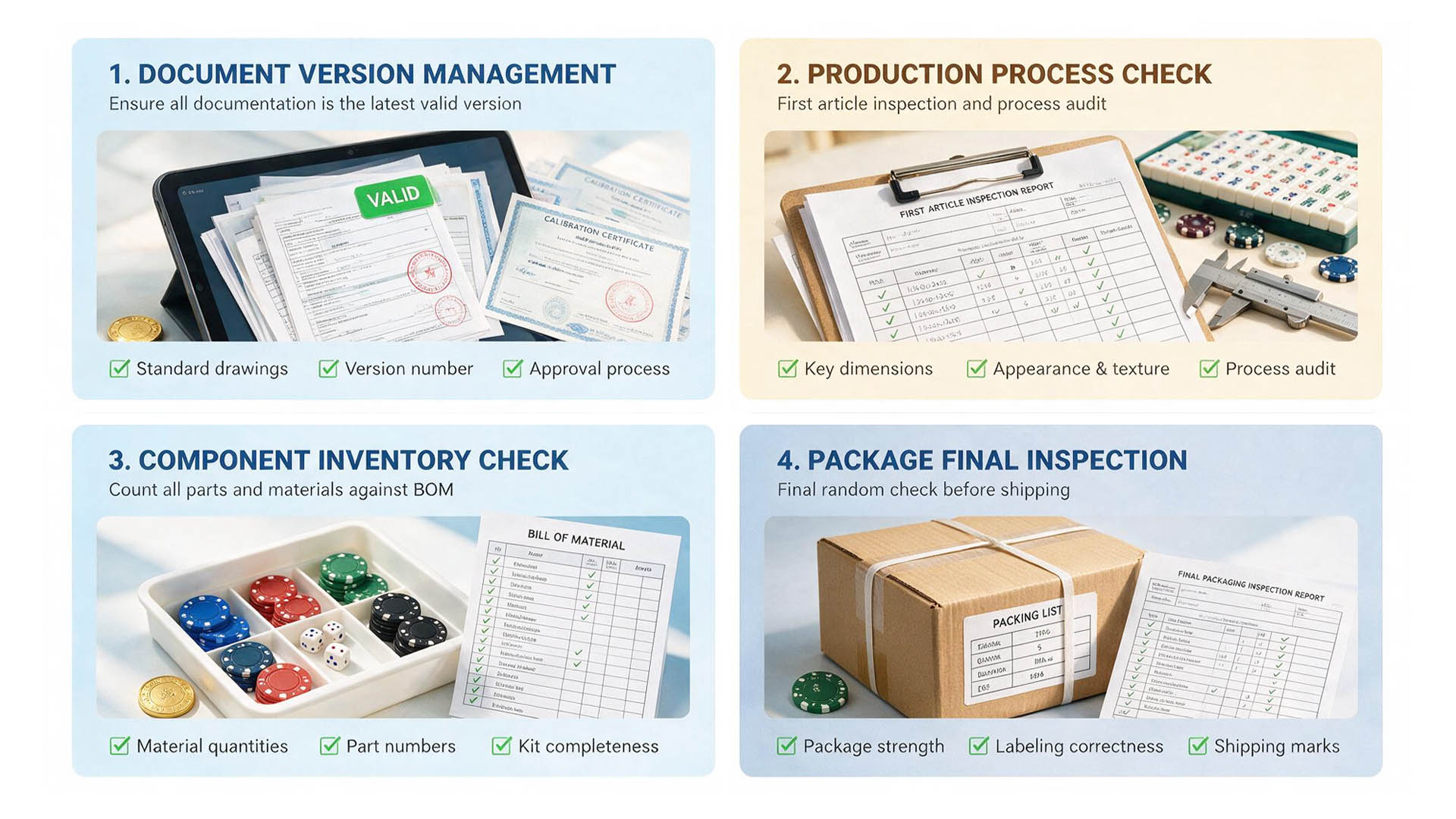
A good sample is necessary but not sufficient. Ask how the supplier controls files, materials, components, in-process checks, final inspection, packing, and changes. Request evidence relevant to the proposed project instead of a generic presentation.
- Which parts are existing, adapted, or newly developed?
- What inputs are missing before a reliable quotation?
- How will artwork and sample versions be identified?
- Which characteristics will be checked during production and final inspection?
- How will the approved component list be controlled?
- Which changes require a new sample or commercial review?
Common OEM and ODM Sourcing Mistakes
- Choosing by label alone: suppliers may define ODM differently.
- Quoting before quantities are defined: separate estimates by design, color, and package.
- Approving renderings as final standards: they cannot confirm finish, fit, or packed condition.
- Leaving accessories unspecified: missing components create pricing and packaging ambiguity.
- Mixing file versions: uncontrolled feedback causes sampling errors.
- Assuming compliance belongs only to the supplier: brands and importers must understand market requirements.
- Changing approved details without review: a small change can affect fit, cost, testing, and schedule.
Frequently Asked Questions
Is OEM always more expensive than ODM?
No. OEM often involves more development, but cost depends on materials, structure, artwork, packaging, quantity, tooling, testing, and versions. Compare written scopes, not labels.
Can an ODM American Mahjong set still look unique?
Yes. Original artwork, color, packaging, accessories, and assortment can create differentiation. Confirm what may be changed and whether any element is exclusive.
When is private label a better option?
It may fit when speed and controlled branding matter more than structural differentiation, and an existing product platform already meets functional needs.
What should be approved before a bulk order?
Approve the specification, artwork, colors, component list, packaging, labels, acceptance criteria, and a complete physical reference sample. Record tolerances or limitations in writing.
What should buyers send for an initial review?
Send the market, channel, reference images or files, product and accessory scope, estimated quantity by version, packaging direction, compliance questions, and desired launch window. Mark undecided items clearly.
Prepare the Right Project Path Before Requesting a Quote
The right sourcing model matches the brand’s product definition, need for differentiation, internal approval capacity, and tolerance for development risk. OEM offers control when the buyer has a complete brief. ODM offers an adaptable starting point. Private label works when the existing platform already fits the commercial need.
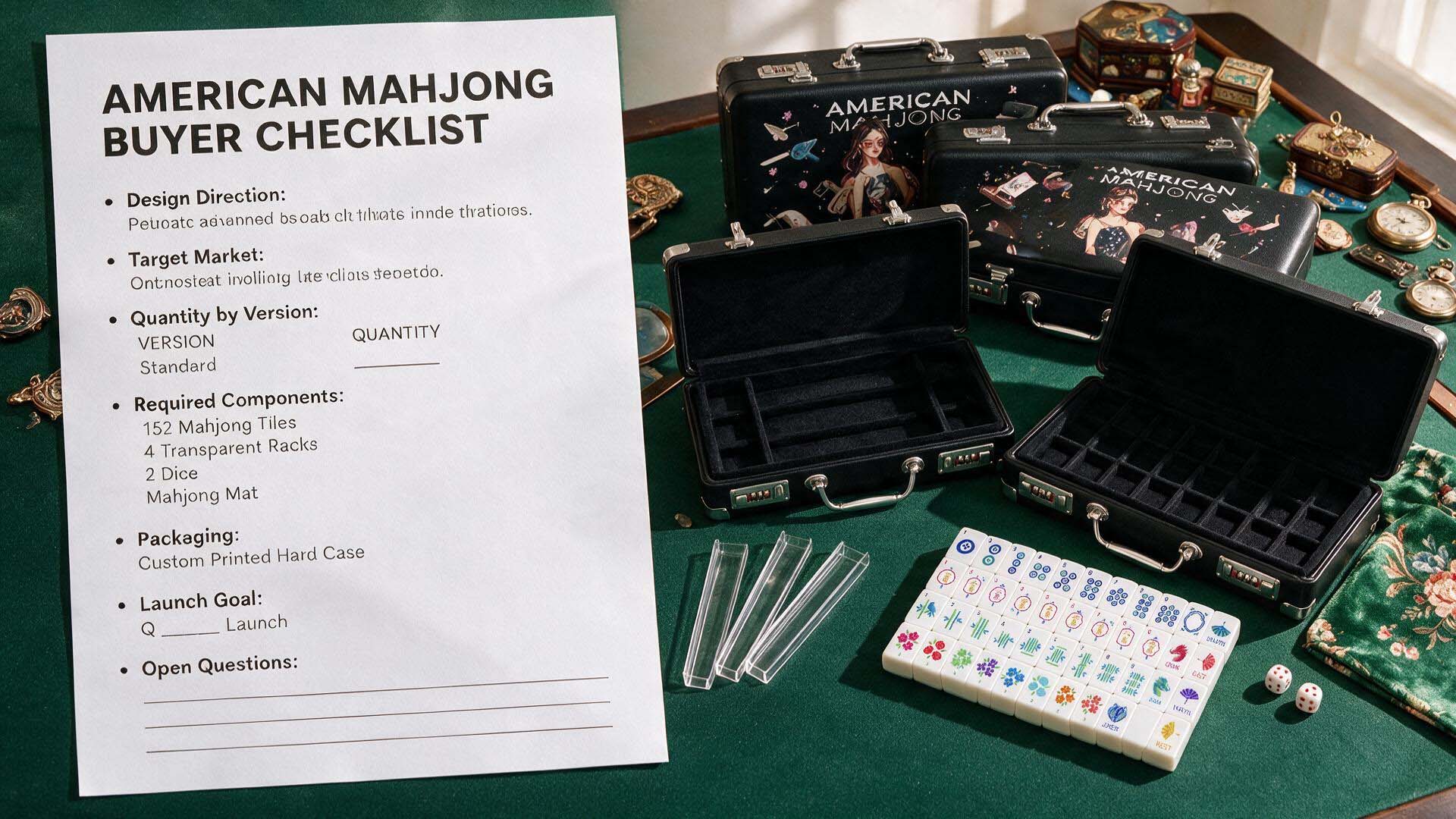
To discuss an OEM, ODM, or private-label American Mahjong project with TOPRAY, send a project brief for feasibility review. Include the design direction, intended market, estimated quantity by version, required components, packaging needs, and target launch date. TOPRAY can then review the scope without inventing specifications that have not been confirmed.