
American Mahjong is moving beyond the family game room into clubs, lessons, parties, and hosted events. Yelp’s 2026 Trend Tracker reported search growth of 4,467% for “mahjong clubs” and 819% for “mahjong lessons.” Separately, Associated Press cited Eventbrite data showing a 179% increase in U.S. mahjong events from 2023 to 2024.
That shift changes the retail brief. Buyers are no longer sourcing only a functional game. They are evaluating a social product that may be displayed in a boutique, photographed for e-commerce, purchased as a gift, or used repeatedly by a club. The best opportunity is therefore not simply the lowest-cost set. It is an American Mahjong set that balances playability, visual identity, retail readiness, and dependable replenishment.
Material Comes First: Why Acrylic Tiles Are Popular
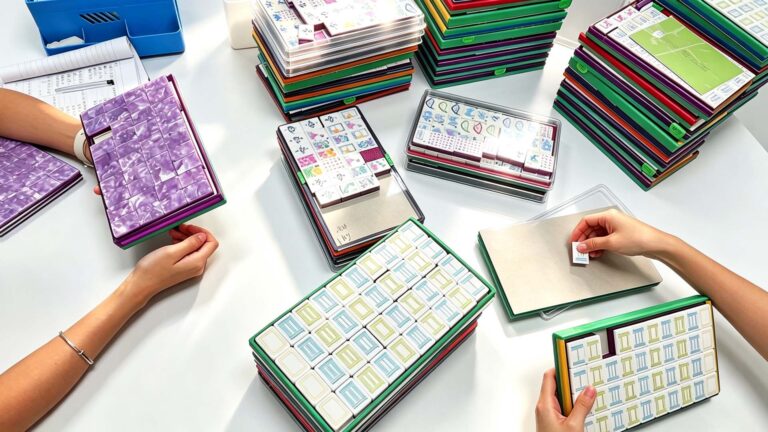
Material defines the first impression. Acrylic American Mahjong sets are popular with modern retail brands because acrylic supports polished surfaces, translucent or opaque color, layered constructions, glitter effects, and coordinated back designs. These qualities make it easier to create a set that looks intentional in product photography and gift presentation.
However, “acrylic” should not be treated as a complete quality specification. Retailers should still request a physical sample and examine surface polish, color consistency, thickness, flatness, and edge finishing. A good American Mahjong set should not only be playable; it should look good enough to display, gift, and photograph without sacrificing daily usability.
Tile Weight and Hand Feel Matter More Than Many Buyers Think
Customers handle every tile repeatedly, so tactile quality becomes part of the brand experience. Tiles that feel excessively light may weaken perceived value, while inconsistent thickness can make stacking and arranging less satisfying. Sharp seams, rough corners, or uneven polish can also turn a visually attractive set into a disappointing purchase.
Before ordering, compare production samples for weight consistency, dimensional consistency, smooth edges, balanced proportions, and comfort during shuffling and pushing. Test the tiles with the intended racks as well. For retailers, these details can influence reviews, returns, repeat purchases, and whether the price feels justified once the box is opened.
Print Clarity Is a Key Quality Standard
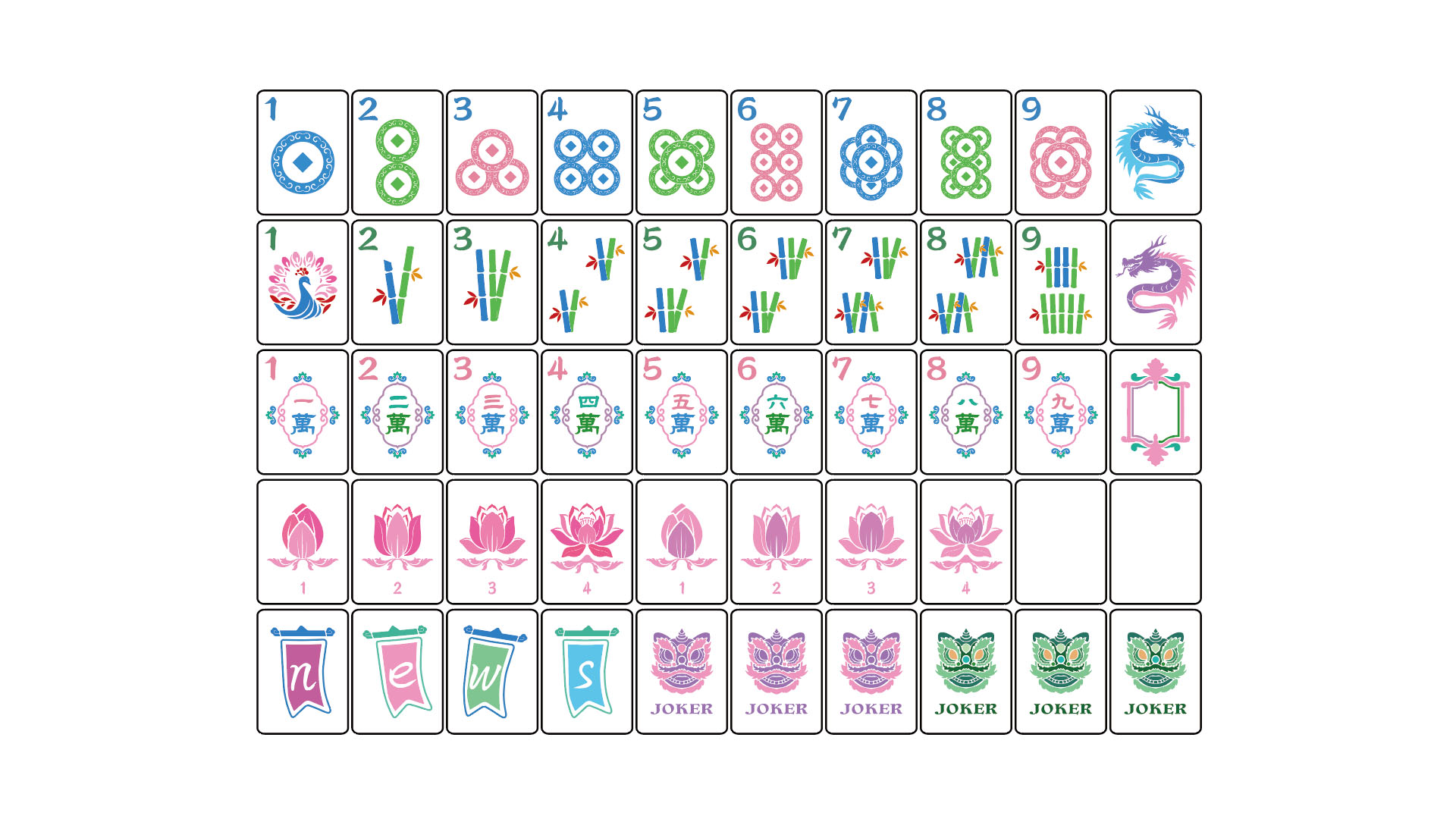
A beautiful design is not enough if players cannot read the tiles clearly during the game. American Mahjong relies on quick recognition of suits, numbers, winds, dragons, flowers, and jokers. Decorative artwork can strengthen a collection, but it must not obscure the information players need.
Review a full sample set rather than one hero tile. Check small linework, color contrast, alignment, repeated symbols, and the consistency of matching tiles. Ask how the supplier controls print color across a production run and how it checks for scratches, fading, blurred edges, missing ink, or artwork placed off-center. Sample approval, in-process checks, and final inspection should all use the same approved artwork and color references.
Accessories Can Increase Retail Value
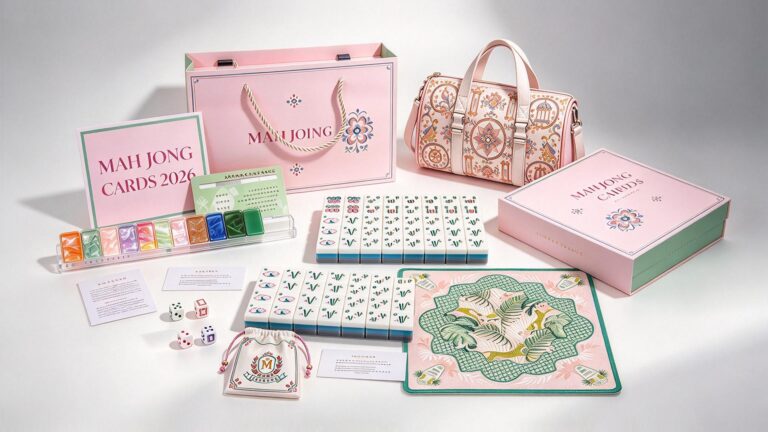
The retail category now extends well beyond tiles. Oh My Mahjong’s current assortment includes mats, racks, pushers, storage products, and other accessories, illustrating how the market has developed into a coordinated table experience. A complete offer may include racks with pushers, dice, a mat, tile or accessory bags, an instruction card, a scorecard holder, and a gift box.
For retailers, accessories create three advantages: a clearer starter bundle, a higher average order value, and future add-on purchases. Matching racks and pushers can also turn a single colorway into a broader collection. The key is to define the bundle precisely so the product page, box contents, and customer expectations remain aligned.
Packaging Should Match the Retail Channel
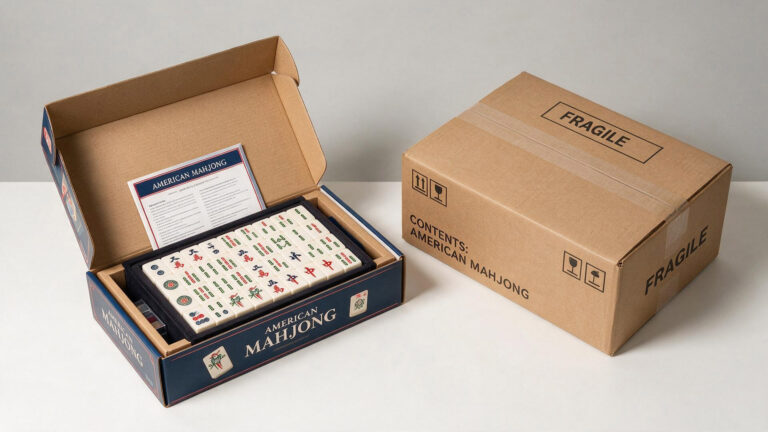
Packaging is not merely a cost line; it is part of product-market fit. Boutique stores benefit from packaging that looks polished on a shelf and communicates the design story quickly. Online sellers need stronger internal protection, scratch prevention, and a structure that can tolerate parcel handling. Gift channels need a satisfying reveal, while clubs often value reusable storage, durability, and easy transport.
Private-label buyers may also require logo placement, brand colors, inserts, instruction cards, barcodes, warning labels, master-carton marks, or channel-specific stickers. Confirm these requirements before quoting, because packaging dimensions affect material cost, shipping volume, and damage risk. Retailers should test not only how the box looks, but also how the set arrives after realistic handling.
Customization Is Becoming More Important
Many brands do not want to sell the same standard set available everywhere else. Custom tile colors, exclusive joker artwork, signature backs, coordinated racks and pushers, logo placement, themed collections, and branded packaging can create a recognizable product line. Holiday editions, club sets, event programs, and gift collaborations offer additional directions.
Custom American Mahjong development works best when the creative brief is connected to playability and production reality. Buyers should define the target customer, price position, sales channel, required components, color standards, and launch date before artwork development begins. A sample should then confirm print clarity, tactile quality, accessory matching, and packaging—not just the visual concept. This reduces late changes and makes mass-production approval more objective.
What Retailers Should Ask Before Placing an Order
Use the questions below to compare suppliers on more than unit price. Written answers should become part of the sample review and purchase specification.
| # | Question to Ask | Why It Matters |
| 1 | What material are the tiles made from? | Confirms the visual finish, product positioning, and manufacturing options. |
| 2 | What are the tile size, thickness, and weight? | Helps buyers compare hand feel, rack fit, portability, and consistency. |
| 3 | Are all faces, jokers, and flowers easy to read? | Protects playability and reduces confusion during actual games. |
| 4 | How is print durability evaluated? | Reveals whether rub, scratch, and handling risks are checked before shipment. |
| 5 | What exactly is included in the set? | Prevents gaps between the product listing, packaging, and customer expectations. |
| 6 | Can racks, pushers, dice, bags, and mats be coordinated? | Supports bundles, themed collections, and a stronger retail presentation. |
| 7 | What packaging is available for our channel? | Aligns shelf display, parcel protection, gifting, labeling, and storage needs. |
| 8 | What are the wholesale and custom MOQs? | Clarifies inventory exposure and whether the project fits the supplier’s production model. |
| 9 | Can we approve a sample before mass production? | Creates a checkpoint for color, print, hand feel, components, and packaging. |
| 10 | How is quality checked before shipment? | Tests whether the supplier has a repeatable plan for in-process and final inspection. |
Why Working With a Direct Manufacturer Matters
For retailers and brands, working with a direct manufacturer is not only about price. It is about consistency, communication, customization, and long-term supply. A manufacturer can review material, artwork, tile construction, accessories, and packaging as one connected product instead of treating each item as a separate purchase.
This involvement matters most when a buyer plans to reorder, expand a winning colorway, or develop a private-label collection. Ask who owns sample approval, how changes are documented, what inspection occurs during production, and whether the supplier can reproduce the approved color and component mix on future orders. A reliable process is more valuable than an attractive sample that cannot be repeated at scale.
Final Thoughts
A good American Mahjong set is not defined by appearance alone. Its real retail value comes from the combination of material quality, satisfying hand feel, readable artwork, complete components, channel-appropriate packaging, and dependable manufacturing support.
If you are sourcing wholesale American Mahjong sets or developing a custom collection, TOPRAY can support acrylic tiles, racks, pushers, accessories, packaging, and private-label product development. Contact TOPRAY to discuss your target market, order plan, and customization requirements.
Frequently Asked Questions
What should retailers look for in an American Mahjong set?
Evaluate the tile material, weight, dimensional consistency, edge finish, print clarity, included accessories, packaging protection, and the supplier’s ability to maintain quality on repeat orders. The set should suit both actual play and the intended retail position.
Are acrylic American Mahjong sets good for retail?
Yes, particularly for boutiques, gift sellers, lifestyle brands, and e-commerce stores that value color, polished presentation, and customization. Buyers should still approve samples because material name alone does not guarantee consistent finishing or print quality.
Do American Mahjong sets need racks and pushers?
Racks and pushers are important to the American Mahjong experience and make a set easier to merchandise as a complete solution. Whether they are included in the main box or sold as a coordinated add-on should be stated clearly.
Can American Mahjong sets be customized?
Yes. Common options include tile colors, backs, jokers, artwork, logos, racks, pushers, accessories, inserts, and retail packaging. Custom projects should use approved samples and documented color and artwork standards before mass production.
What is the difference between wholesale and custom American Mahjong sets?
Wholesale orders typically use existing designs and packaging, which can simplify selection and shorten preparation. Custom orders create a differentiated product for a brand, but require artwork, sampling, approvals, production planning, and usually a different MOQ and lead time.