
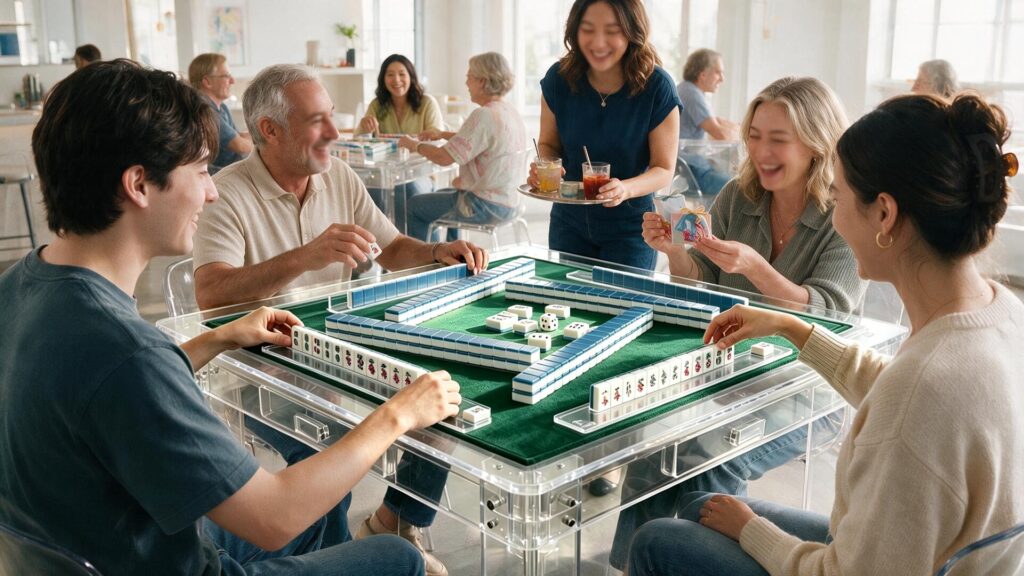
The American Mahjong market in 2026 is no longer defined by one familiar customer buying one traditional set for home play. It now includes first-time learners, instructors, social clubs, gift shoppers, boutique buyers, online brands, hotels, retreats, and private label businesses. Each group enters the category for a different reason, shops with a different budget, and evaluates products by different standards.
That distinction matters for B2B buyers. A beginner may value clear instructions and a complete bundle, while a boutique needs shelf appeal and gift-ready packaging. A teacher prioritizes durability; a DTC brand needs visual differentiation and reliable replenishment. The strongest product strategy therefore begins with segmentation, not with selecting the largest possible assortment.
The American Mahjong Market Is Becoming More Diverse
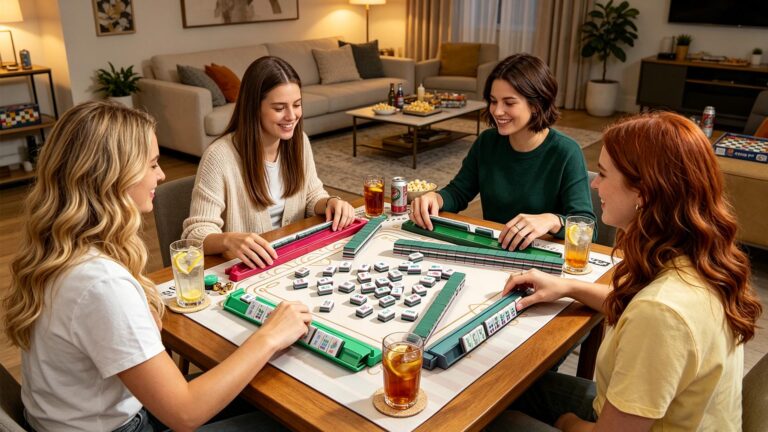
The category is expanding from home game nights into lessons, clubs, retail events, gifting, hospitality, and lifestyle collections. Yelp’s 2026 Trend Tracker, as reported by Reuters, found that U.S. searches for “mahjong clubs” rose 4,467% year over year and searches for “mahjong lessons” rose 819% during the period from September 2024 through August 2025. These figures measure search activity, not total product sales, but they clearly show where discovery is happening.
The market is also becoming more experiential. ICSC has documented studios and gift boutiques combining classes, open play, events, and product sales. Eventbrite data reported by Vanity Fair showed nearly three times as many U.S. Mahjong events listed in January 2026 as in January 2025. Meanwhile, AFAR reports that U.S. hotels are adding American Mahjong clinics, recurring social nights, and multiday retreats. Together, these signals suggest that the American Mahjong market is increasingly supported by communities and occasions, not only individual purchases.
Segment 1: New Players and Beginner Learners
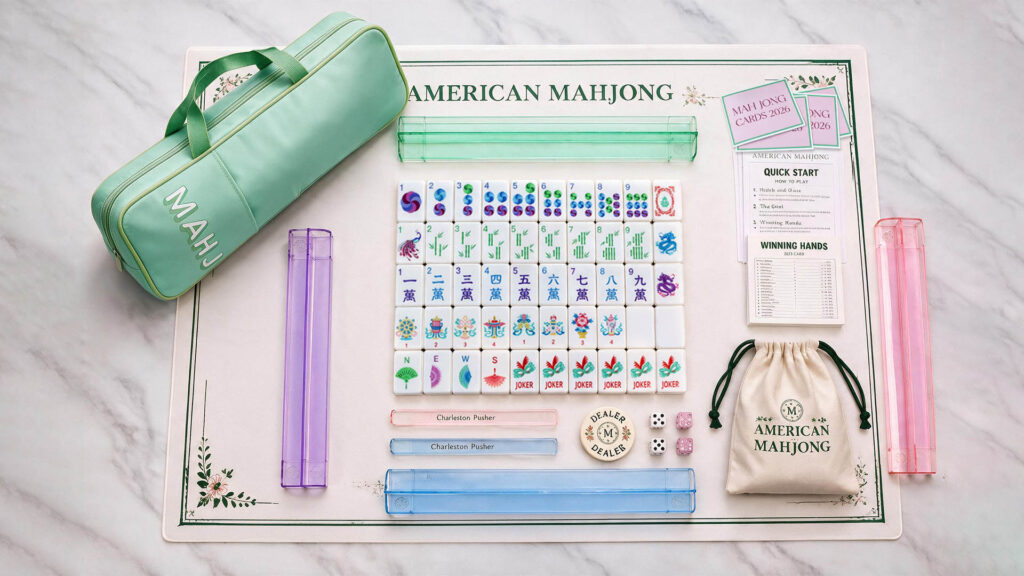
New players often discover American Mahjong through a friend, a class, social media, or a local event. Their first concern is usually not material innovation; it is confidence. They need to know that the set contains the right tiles and that the overall package will help them start playing without buying several missing items later.
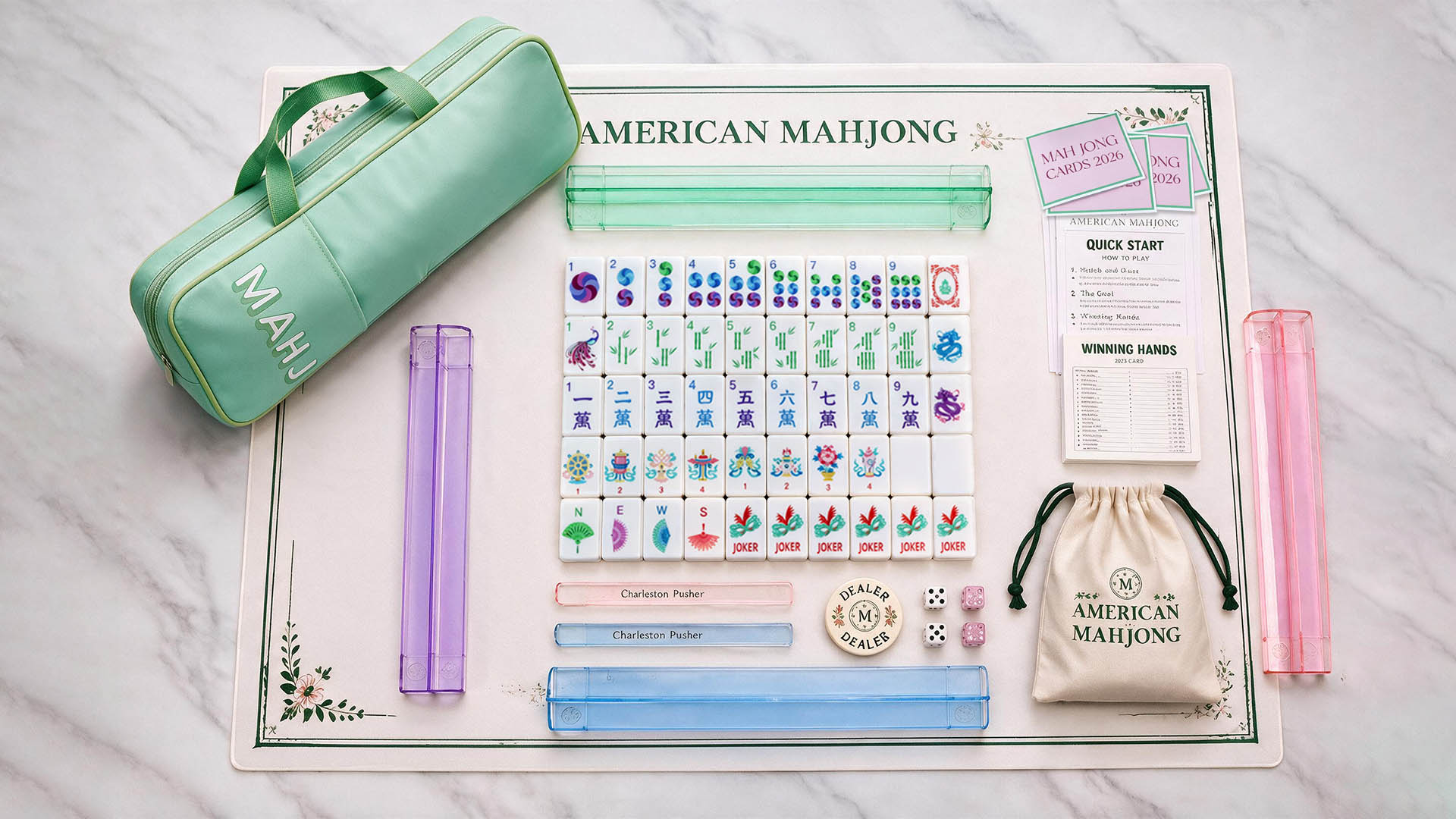
Beginner-friendly products should reduce friction with readable tile faces, a concise instruction card, clear contents labeling, and coordinated racks, pushers, dice, a mat, or a storage bag where appropriate. An accessible acrylic or melamine option can support a comfortable opening price point. Retailers can also improve conversion by explaining that the annual playing card is obtained separately from the relevant rules organization. Product education should accurately acknowledge Mahjong’s Chinese origins and the Jewish American history that shaped the American version.
Segment 2: Mahjong Clubs, Teachers, and Lesson Organizers
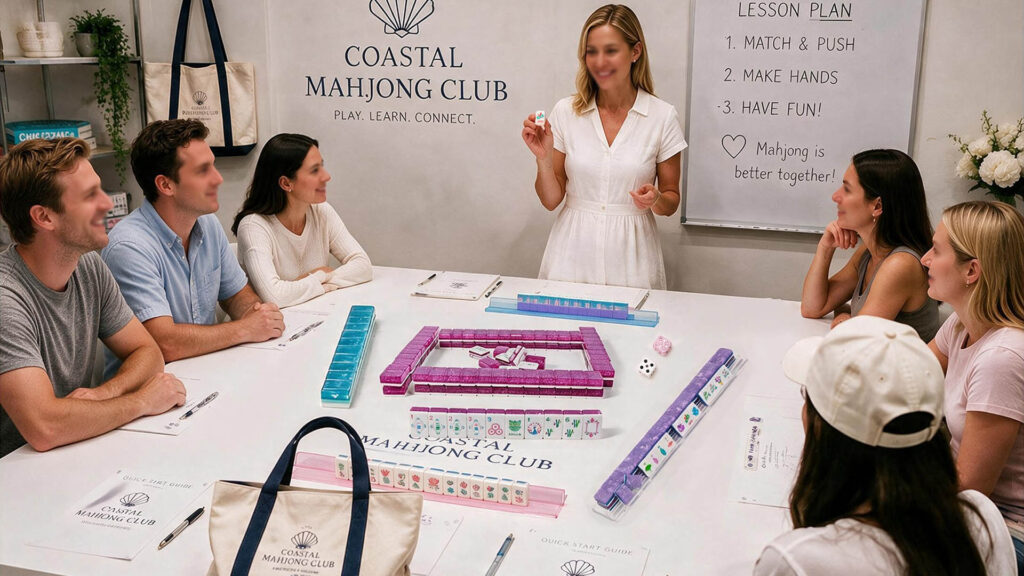
In the American Mahjong market, clubs and instructors are among the most practical B2B segments because one operator may need several identical sets for classes, leagues, or open-play sessions. Their products are handled frequently, transported often, and used by players with different experience levels. Durability, consistency, easy cleaning, and simple storage can matter more than elaborate packaging.
A club supply program may include bulk American Mahjong sets, sturdy racks and pushers, carrying bags, replacement components, and straightforward cartons that are easy to manage. Logo printing on bags, mats, or selected packaging can reinforce the organizer’s identity without making the kit too precious for everyday use. For suppliers, stable specifications and repeat-order consistency are essential because one mismatched replacement set can disrupt a teaching table.
Segment 3: Gift Buyers and Lifestyle Consumers
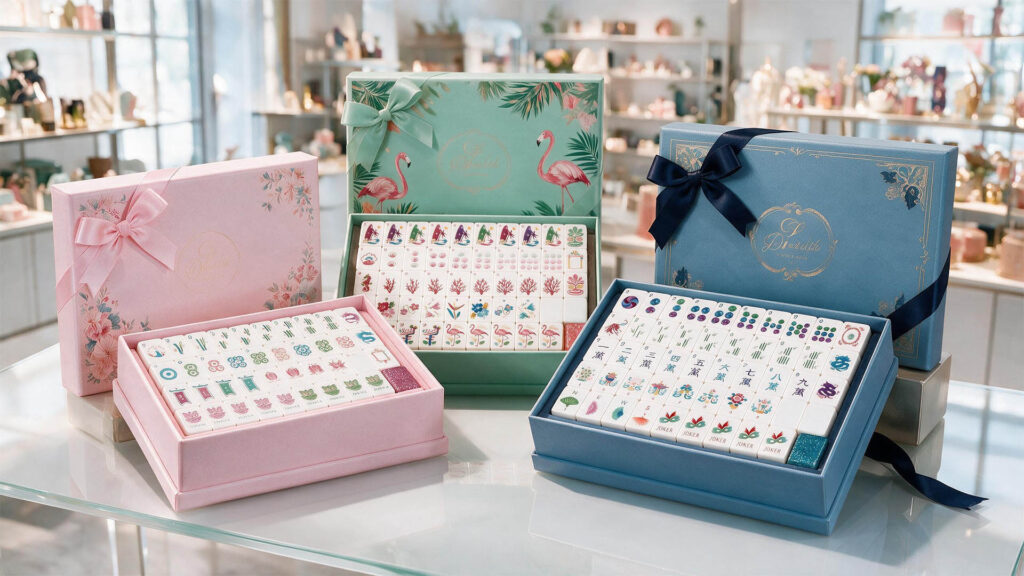
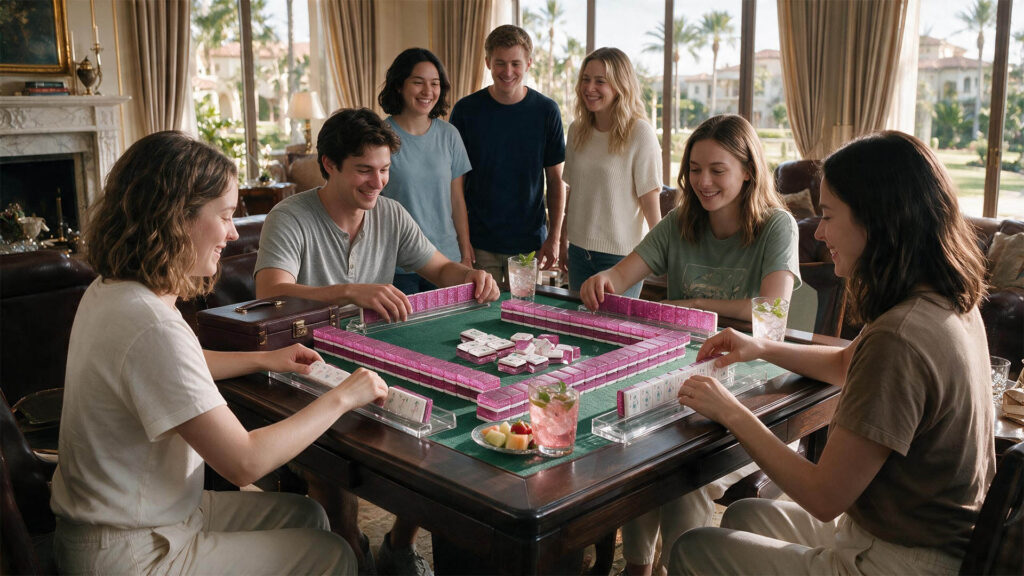
Gift buyers represent a style-led part of the American Mahjong market. They may be shopping for a birthday, Mother’s Day, a housewarming, a hostess gift, or a holiday gathering, and some will know little about technical tile specifications. They judge the product first by presentation: color, theme, packaging, completeness, and the feeling created when the box is opened.
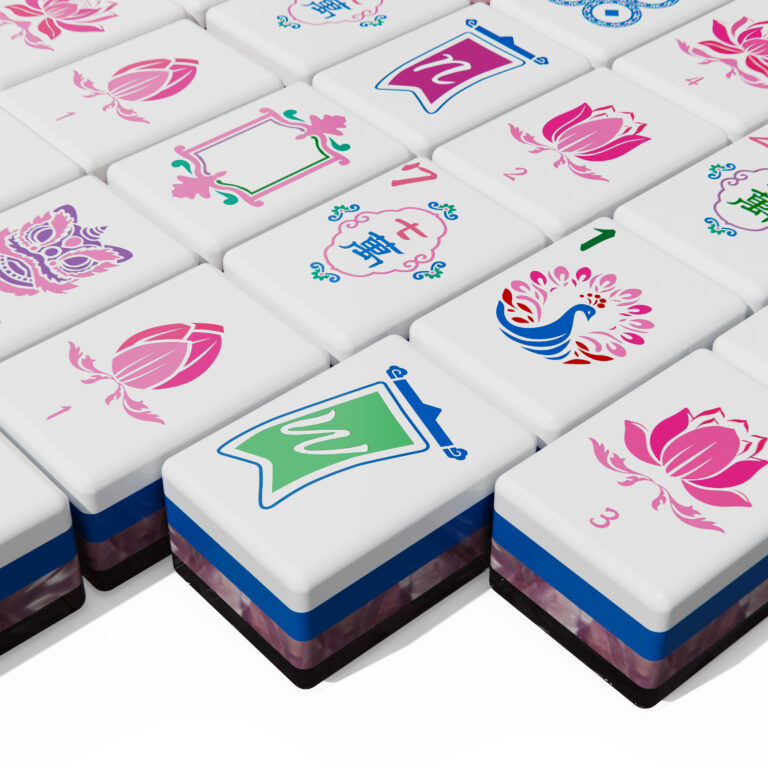
This segment creates room for pastel, floral, coastal, seasonal, and limited-edition collections, especially when the set coordinates with racks, a mat, or a storage bag. Premium-looking packaging should also protect the tiles during parcel delivery. The opportunity is not simply to make a set decorative; it is to make the design readable and playable while giving the buyer a clear gift story.
Segment 4: Boutique Retailers and Gift Shops
Boutique buyers are channel customers rather than end players. They need a product that can earn attention on a shelf, communicate value quickly, fit the store’s aesthetic, and support a sensible retail price. They also care about carton durability, barcodes, product information, display photography, and whether accessories can generate follow-up purchases.
For a first order, a curated assortment is usually safer than a wide, untested range. One classic option, one broadly giftable colorway, and one statement design can reveal what the local customer prefers. ICSC’s reporting shows why classes and demonstrations may strengthen this channel: a boutique can turn product discovery into a community event, increasing both dwell time and the opportunity to sell complete table setups.
Segment 5: Online Sellers and DTC Brands
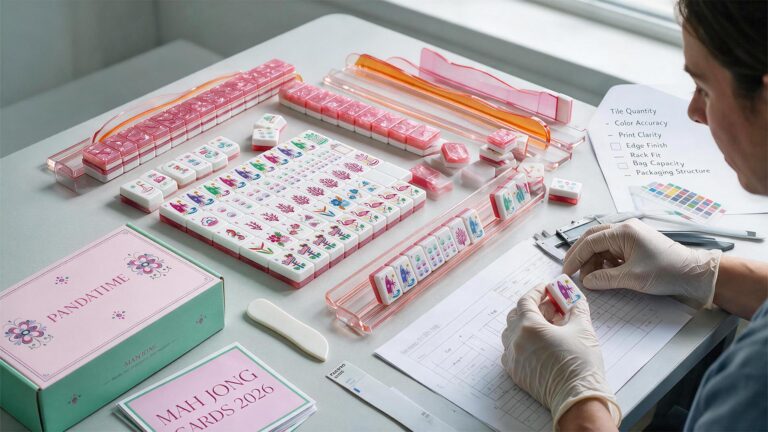
Online sellers depend on immediate visual recognition. Tiles, backs, racks, mats, and packaging must look distinctive in a thumbnail, a short video, or a lifestyle photograph. At the same time, a highly photogenic launch can fail if customers receive damaged boxes, unclear components, inconsistent colors, or a set that does not match the listing.
These buyers often need private labeling, exclusive colorways, branded packaging, accessory bundles, and a repeatable SKU system. They also need packaging engineered for direct-to-consumer shipping and product data that supports accurate listings. A strong supplier relationship should cover samples, color standards, preproduction approval, quality inspection, replenishment, and seasonal launch timing-not only the first production run.
Segment 6: Hotels, Retreats, and Experience-Based Venues
Hotels and retreats are turning Mahjong into a programmed experience rather than a simple amenity. AFAR identified properties using beginner clinics, open-play nights, and instructor-led retreats to bring travelers and local residents together. This creates a specialized demand for sets that staff can deploy, collect, clean, store, and transport efficiently.
Useful packages may combine durable tiles, instructions, racks, pushers, branded mats, and protective carrying cases. A premium venue may prefer a coordinated table setup that photographs well and matches the property identity, while a recurring class program may prioritize fast setup and replacement availability. For this segment, the best product is an operational system: it should help the venue run the event smoothly and reproduce the same guest experience.
Segment 7: Private Label and Lifestyle Brands
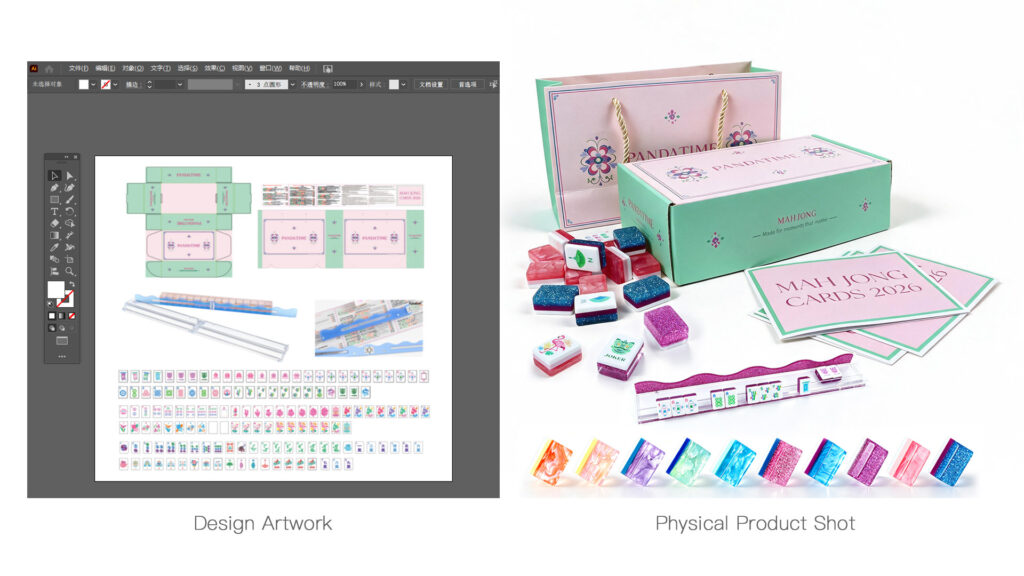
Private label brands are not trying to resell a generic set indefinitely. They want ownership of a recognizable product language and a collection that can grow over time. Their decisions may include tile color and transparency, custom backs, Joker and flower artwork, racks, pushers, mats, bags, inserts, and retail packaging.
The development process should begin with the target customer, price position, sales channel, and planned launch date. A brand serving modern gift shops may choose a different material, accessory bundle, and box structure from a club-focused label. Rather than customizing everything at once, brands can build a platform: define a stable tile specification and packaging system, then introduce new colorways or seasonal artwork within that structure. TOPRAY’s custom American Mahjong product development guide explains the main decisions in more detail.
What These Market Segments Mean for Product Development
The same set should not be expected to serve every buyer equally well. Product teams can use the following summary to align design, packaging, and inventory with the intended customer.
| Market segment | Main buying motivation | Product priority |
| Beginner players | Learn with less confusion | Complete starter set, readable tiles, clear guidance |
| Clubs and teachers | Teach and support repeated use | Bulk consistency, durability, storage, replacements |
| Gift buyers | Give a memorable, polished present | Visual theme, protective gift box, coordinated accessories |
| Boutique retailers | Sell a story-ready shelf product | Curated SKUs, retail packaging, display appeal |
| Online sellers | Differentiate and convert through content | Exclusive visuals, parcel protection, bundles, stable reorders |
| Hotels and retreats | Deliver a repeatable social experience | Event-ready kits, branded mats, carrying cases |
| Private label brands | Own a scalable product line | Custom tiles, packaging system, accessory and series development |
Source: TOPRAY market-segmentation framework, informed by the cited 2026 market evidence.
How Retailers Should Choose Their First Product Direction
Strategy 1: Start With Beginner-Friendly Sets
This is the lowest-friction direction for stores serving new players, clubs, or lesson organizers. Prioritize completeness, clear contents, legible artwork, practical accessories, and an approachable price. A small range of dependable starter sets is easier to explain and replenish than many visually similar SKUs. Retailers can pair the products with beginner content, demonstrations, or local classes to turn curiosity into confident purchase decisions.
Strategy 2: Build a Giftable Product Line
Gift shops and lifestyle retailers should begin with a defined visual story rather than disconnected colors. Select two to four colorways, establish consistent packaging, and add one or two matching accessories that increase perceived value. Plan backward from seasonal delivery dates, leaving enough time for sampling, photography, production, and freight. Review the 2026 American Mahjong trend for additional context on gifting and lifestyle positioning.
Strategy 3: Develop a Custom Branded Collection
DTC brands and premium retailers should first define what must be exclusive and what can remain standardized. Custom tile artwork, signature colors, branded packaging, and a coordinated mat may create a strong identity without adding unnecessary complexity to every component. Approve physical samples, document color and finish standards, and design the first collection with reorders in mind. A scalable system usually produces better long-term results than a one-time novelty set.
Final Thoughts
The American Mahjong market is not growing from one buyer group. Its opportunity comes from beginners who need guidance, clubs that require durable bulk supply, gift shoppers who value presentation, retailers that need a strong shelf story, digital brands that need differentiation, venues that sell experiences, and private label businesses building long-term collections.
For retailers and brands, the key is not to follow the category with an oversized assortment. It is to choose a segment, understand its buying occasion, and develop the right combination of tiles, accessories, packaging, price, and replenishment support. TOPRAY supplies wholesale and custom American Mahjong products, including acrylic tiles, racks, pushers, accessories, packaging, and private label development for different market channels. Contact TOPRAY to discuss a focused product direction for your customers.