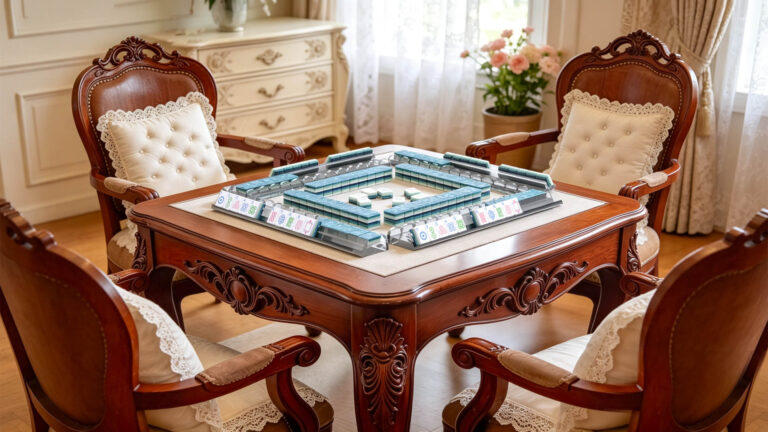
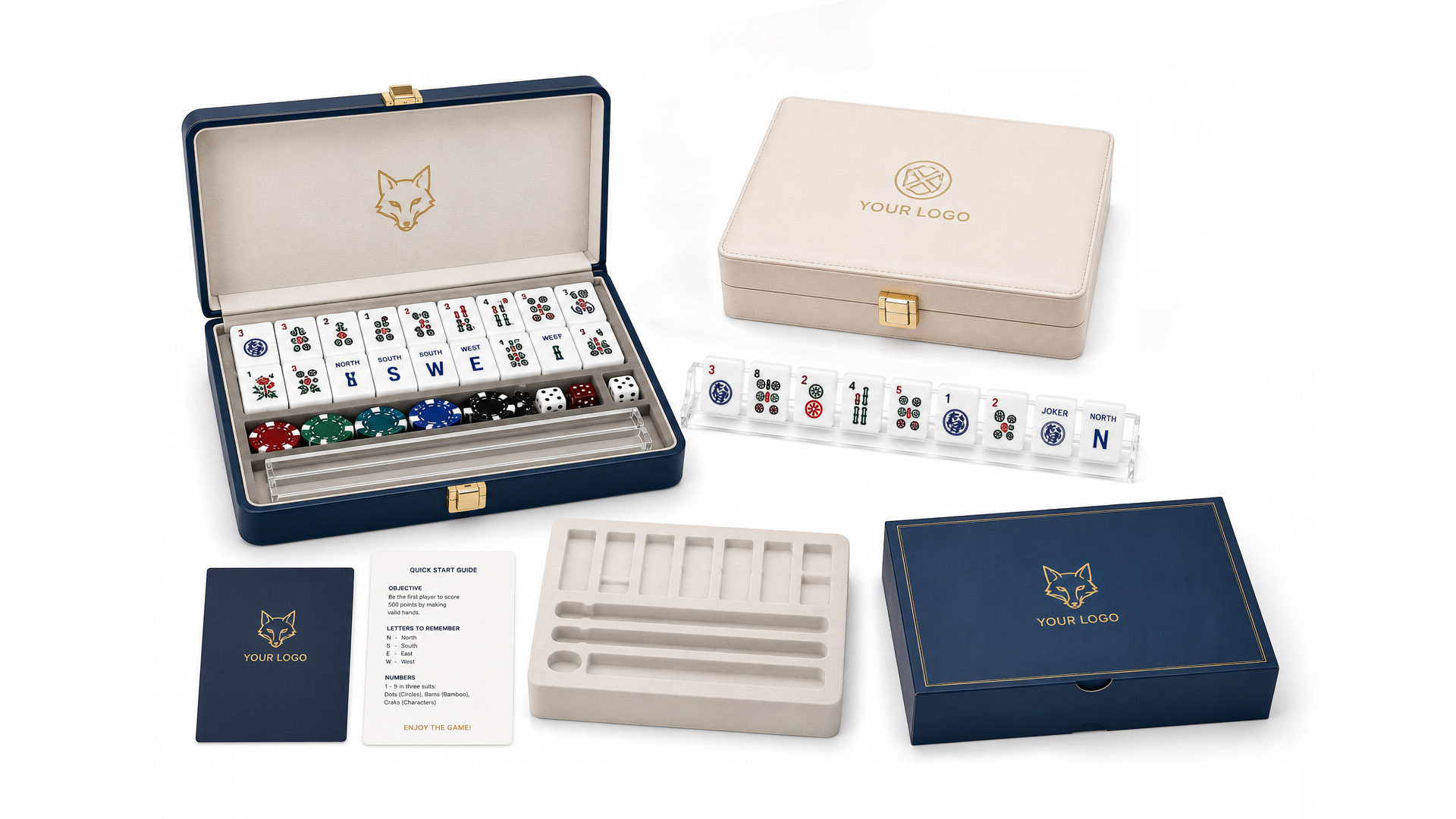

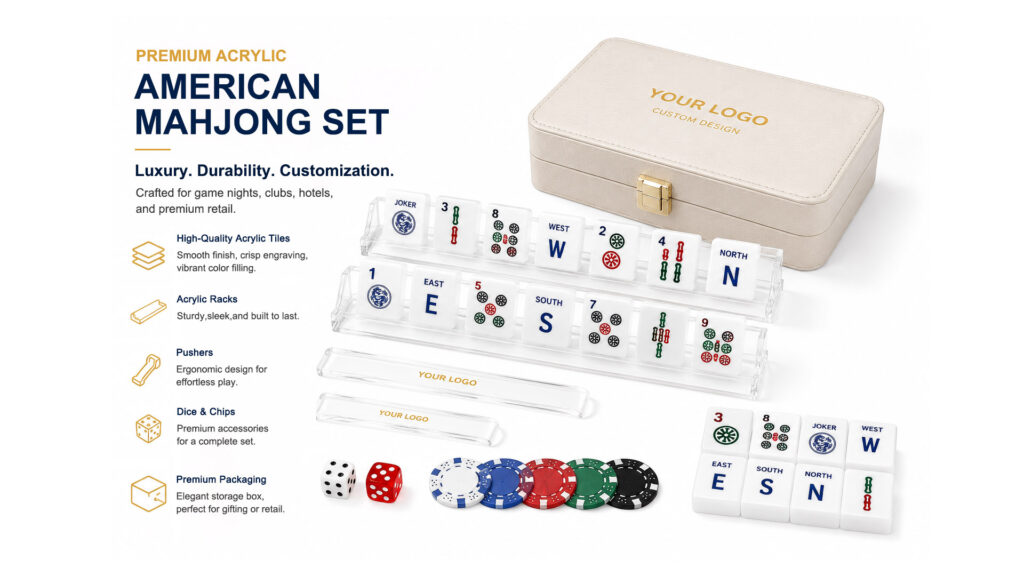
Acrylic Mahjong has become a popular choice for modern game brands, retailers, gift companies, distributors, and private label buyers. Compared with traditional Mahjong materials, acrylic offers bright colors, clean edges, a smooth hand feel, and strong visual appeal. These advantages make acrylic Mahjong sets suitable for retail products, custom gift collections, wholesale programs, and branded tabletop game lines.
For B2B buyers, understanding how acrylic Mahjong sets are made is important before starting a custom or wholesale project. The manufacturing process affects product quality, pricing, MOQ, sample lead time, packaging cost, and long-term consistency. A well-made acrylic Mahjong set is not only about attractive colors. It also requires accurate cutting, clear symbols, smooth polishing, durable finishing, complete accessories, and reliable quality control.
This guide explains the full acrylic Mahjong manufacturing process and what buyers should know when developing custom acrylic Mahjong sets for retail, wholesale, or private label projects.
What Is Acrylic Mahjong?
Acrylic Mahjong refers to Mahjong tiles and accessories made from acrylic, also known as PMMA. Acrylic is a hard plastic material that can be produced in many colors, transparency levels, and decorative effects. It is commonly used for clear, translucent, solid color, glitter, pearl, marble-effect, and layered designs.
In Mahjong production, acrylic is mainly used for tiles, racks, pushers, storage boxes, trays, and display accessories. Because acrylic can create a modern and colorful appearance, it is especially suitable for custom Mahjong sets, premium gift sets, and lifestyle-focused tabletop products.
Acrylic Mahjong sets are popular because they combine function and design. The tiles must be easy to read and comfortable to handle, while the overall product also needs to look attractive in product photography, retail displays, social media posts, and gift packaging.
Why Acrylic Mahjong Is Popular for Custom Game Sets
Acrylic gives brands more design flexibility than many standard materials. Buyers can choose soft pastel colors, bold tones, transparent effects, layered tile backs, glitter finishes, or fully customized visual themes. This makes acrylic Mahjong a strong option for brands that want to create a distinctive product line instead of selling a generic game set.
Another advantage is hand feel. Mahjong is a tactile game, so the weight, smoothness, edges, and surface finish of each tile matter. A high-quality acrylic Mahjong tile should feel smooth, balanced, and comfortable during repeated play.
Acrylic also supports multiple customization methods. Symbols can be engraved, color-filled, UV printed, screen printed, or combined with decorative artwork. This allows brands to customize suits, numbers, flowers, jokers, logos, and special tile designs.
For wholesale and private label buyers, acrylic Mahjong offers strong product differentiation. A well-designed acrylic set can work for gift shops, online stores, clubs, lifestyle brands, promotional projects, and premium retail collections.
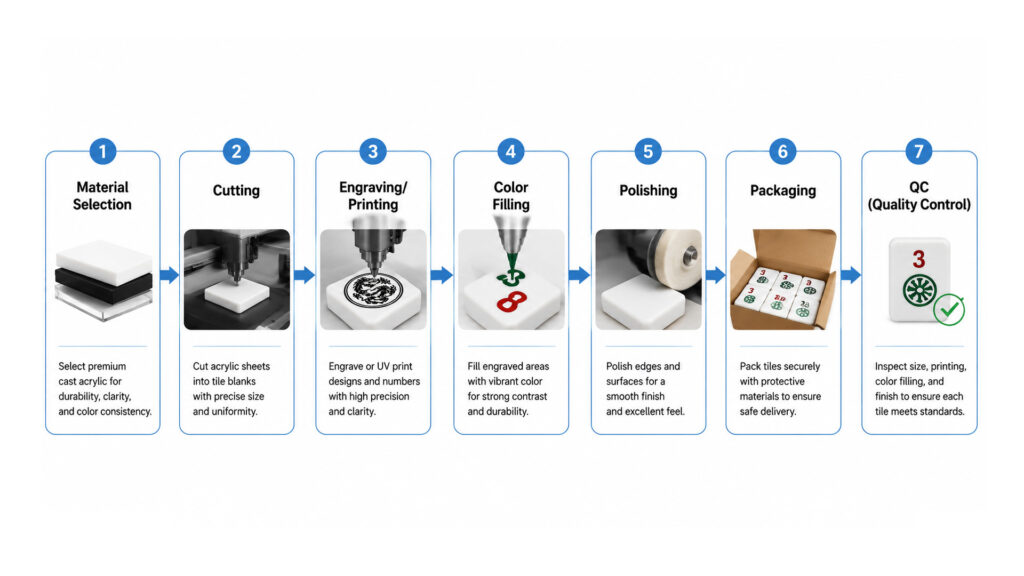
Acrylic Mahjong Manufacturing Process Overview
The full production process includes several important steps. Each step affects the quality, appearance, and durability of the finished Mahjong set.
| Manufacturing Step | Main Purpose | Key Quality Point |
| Design confirmation | Define tile style, size, colors, artwork, and accessories | Complete and accurate product brief |
| Acrylic material selection | Choose color, thickness, finish, and transparency | Stable material quality and color consistency |
| Tile blank cutting | Cut acrylic into uniform Mahjong tile shapes | Accurate size and thickness |
| Edge smoothing | Remove sharp edges and tool marks | Comfortable hand feel |
| Engraving or printing | Apply Mahjong symbols and custom artwork | Clear and accurate symbols |
| Color filling | Add color into engraved symbols | Clean details and strong readability |
| Polishing | Improve shine, smoothness, and premium appearance | Clear edges and scratch control |
| Accessory production | Make racks, pushers, dice, chips, bags, or trays | Matching style and reliable function |
| Packaging | Protect and present the full set | Strong structure and brand consistency |
| Quality control | Inspect tiles, accessories, and packaging | Complete set with consistent quality |
This process shows why a reliable acrylic Mahjong supplier needs more than basic material processing capability. The supplier must understand product design, tile configuration, finishing standards, packaging, and bulk order management.
Step 1: Confirming the Acrylic Mahjong Set Design
The manufacturing process begins with design confirmation. Before production starts, the supplier needs to understand the buyer’s product requirements, target market, order quantity, and customization level.
For a standard acrylic Mahjong set, this usually includes tile size, tile thickness, tile color, symbol style, tile quantity, accessory list, and packaging method. For a custom acrylic Mahjong project, the buyer may also provide brand colors, logo files, custom flower tile artwork, joker designs, packaging concepts, and reference images.
This step is especially important for private label projects. A brand may want matching colors across tiles, racks, pushers, bags, and packaging. If the design brief is unclear, the sample may require more revisions, which can increase development time.
B2B buyers should prepare a clear product brief before requesting a quote. The brief should include the product type, expected quantity, target price range, packaging requirements, customization details, and preferred delivery timeline.
Step 2: Selecting Acrylic Material
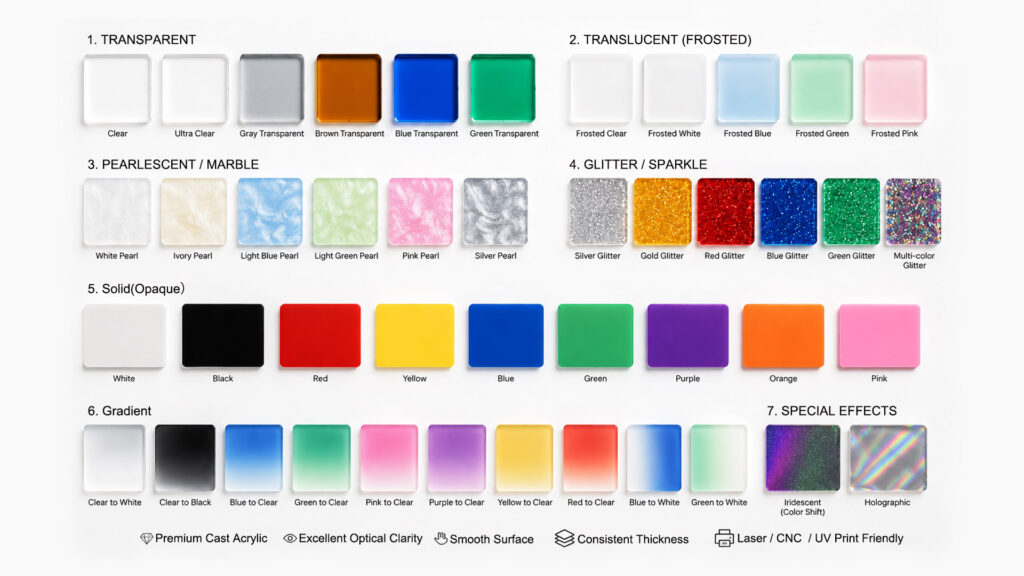
Material selection directly affects the final appearance, cost, and quality of acrylic Mahjong sets. Acrylic sheets can be produced in different colors, transparency levels, thicknesses, and finishes.
Common acrylic options include solid color acrylic, clear acrylic, translucent acrylic, glitter acrylic, pearl acrylic, marble-effect acrylic, and layered acrylic. Each option creates a different product style. Clear or translucent acrylic can create a modern look, while layered acrylic can make the tile feel more premium and distinctive.
Tile thickness is also important. Acrylic Mahjong tiles should be strong enough for repeated use, but they should not feel too heavy or uncomfortable. The supplier needs to balance size, thickness, weight, durability, and cost based on the buyer’s market positioning.
For custom colors, buyers should confirm whether the color is available as a standard material or requires custom production. Special acrylic colors may require a higher MOQ and longer lead time.
Step 3: Cutting Acrylic Mahjong Tile Blanks
After the material is selected, acrylic sheets are cut into Mahjong tile blanks. These blanks form the basic tile shape before engraving, printing, polishing, or finishing.
Precision is critical at this stage. Every tile in a set should have the same size, thickness, and shape. If the tiles are uneven, the set will look low quality and may not feel professional during play.
Factories may use CNC cutting, laser cutting, or other precision cutting methods depending on the material, tile size, and production volume. CNC cutting is often used when accuracy and edge control are important. Laser cutting may be suitable for certain acrylic parts, but the edge effect must be carefully controlled.
After cutting, tile blanks should be checked for cracks, chipped edges, scratches, burn marks, and size differences. Early inspection helps reduce defects before later processes begin.
Step 4: Edge Smoothing and Surface Preparation
Raw-cut acrylic may have sharp edges, rough corners, or visible tool marks. These imperfections need to be removed before the tiles become finished Mahjong pieces.
Edge smoothing may include deburring, sanding, corner rounding, and fine surface preparation. The goal is to make each acrylic Mahjong tile safe and comfortable to handle. Since players pick up, arrange, and move tiles repeatedly, smooth edges are essential for a better playing experience.
Surface preparation is also required before engraving or printing. Dust, oil, or small particles can affect artwork quality. A clean surface helps improve engraving accuracy, printing adhesion, and final appearance.
Good preparation at this stage makes later steps more consistent and reduces the risk of visible defects.
Step 5: Engraving or Printing Mahjong Symbols
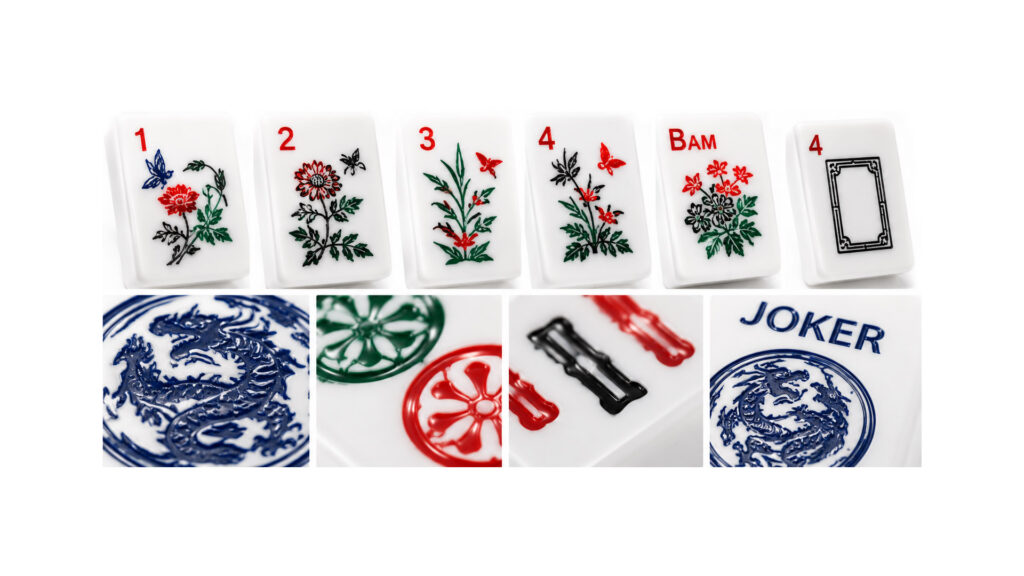
Applying the Mahjong symbols is one of the most important steps in acrylic Mahjong manufacturing. The symbols must be clear, accurate, durable, and easy to read.
One common method is engraving. The machine cuts the symbols into the tile surface, creating recessed details. These recessed areas can then be filled with color. Engraving gives the tile a more tactile effect and can improve long-term durability.
Another method is UV printing. UV printing allows detailed and colorful graphics to be applied to the tile surface. It is useful for custom flower tiles, modern joker designs, decorative artwork, and brand logos. For custom acrylic Mahjong sets with strong visual themes, UV printing can offer more creative flexibility.
Some products combine engraving and printing. For example, standard Mahjong symbols may be engraved and color-filled, while special artwork or logos may be printed.
The best method depends on design complexity, durability requirements, order quantity, budget, and target market.
Step 6: Color Filling and Detail Cleaning
For engraved acrylic Mahjong tiles, color filling is usually required. The engraved areas are filled with color to make the symbols visible and readable.
This process requires careful control. If the color is uneven, the symbols may look messy. If excess color remains on the tile surface, the product may appear unfinished. Clean detail work is especially important for premium acrylic Mahjong sets.
Readability should always come first. Even when the design is creative, players still need to identify suits, numbers, winds, dragons, flowers, and jokers quickly. A good acrylic Mahjong set should balance visual design with practical gameplay.
After color filling, the tiles are cleaned and checked again to make sure every symbol is complete, clear, and correctly placed.
Step 7: Polishing Acrylic Mahjong Tiles
Polishing gives acrylic Mahjong tiles their smooth and premium appearance. After cutting, engraving, and edge processing, the tiles may still have dull edges, light scratches, or tool marks. Polishing helps improve clarity, shine, and hand feel.
Edge polishing makes the sides of the tile cleaner and smoother. Surface polishing improves the overall visual quality. For transparent or translucent acrylic Mahjong tiles, polishing is especially important because cloudy edges can reduce the premium effect.
A well-polished acrylic tile should look clean, smooth, and consistent across the whole set. Poor polishing may leave cloudy edges, uneven shine, scratches, or a low-end appearance.
For high-end custom acrylic Mahjong sets, polishing can make a major difference in perceived value.
Step 8: Producing Racks, Pushers, and Accessories
A complete Mahjong set often includes more than tiles. Depending on the product type, it may include racks, pushers, dice, chips, a bettor, trays, bags, mats, or storage boxes.
For American Mahjong sets, racks and pushers are especially important. They can also be made from acrylic to match the tiles. Matching accessories create a more complete and premium product experience.
When producing acrylic racks and pushers, the supplier needs to consider size, stability, smoothness, and function. A rack should hold the tiles securely. A pusher should move smoothly and feel strong enough for repeated use.
Accessories should not be treated as secondary details. For retail and gift products, accessories can strongly affect customer satisfaction, product reviews, and repeat orders.
Step 9: Custom Packaging for Acrylic Mahjong Sets
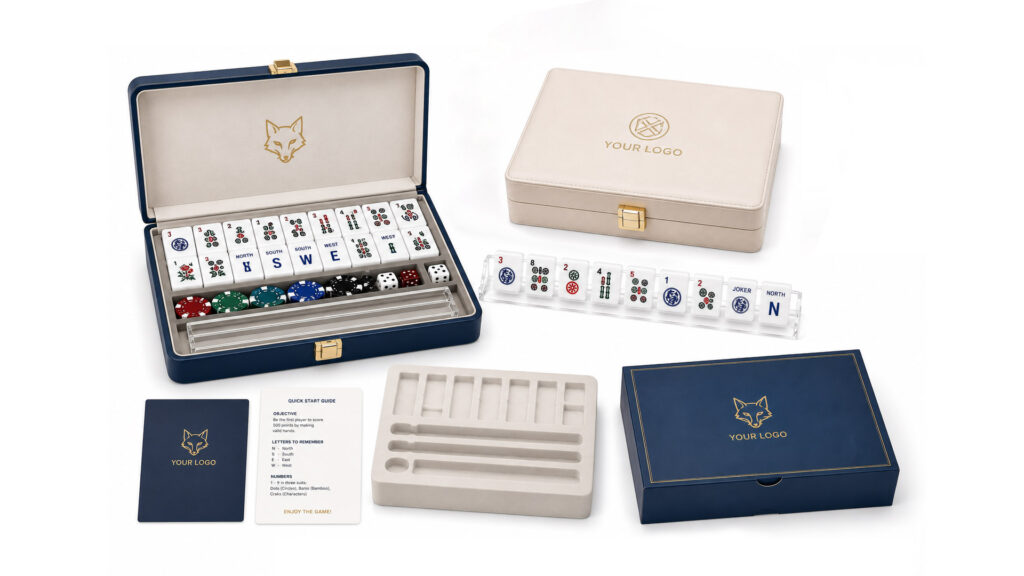
Packaging is a major part of acrylic Mahjong production. Since Mahjong sets are often sold as gifts, retail products, or lifestyle items, packaging directly affects product value.
Common packaging options include color boxes, rigid gift boxes, magnetic boxes, drawer boxes, carrying bags, and protective cartons. For e-commerce sales, packaging must also protect the tiles during shipping. Acrylic Mahjong sets can be heavy, so the inner tray or compartment structure should prevent movement and damage.
Branding can be added through logo printing, box artwork, labels, instruction cards, thank-you cards, barcode stickers, and retail inserts. For private label buyers, packaging is one of the most effective ways to build brand identity.
A good acrylic Mahjong supplier should help buyers choose packaging that fits the target price, sales channel, shipping method, and brand positioning.
Step 10: Quality Control Before Shipment
Quality control is essential for acrylic Mahjong sets because each set contains many tiles and accessories. Inspection must be detailed and consistent.
For tiles, the supplier should check size consistency, color matching, symbol accuracy, printing clarity, engraving depth, color filling, edge smoothness, polishing quality, scratches, bubbles, cracks, and missing pieces.
For accessories, inspection should include rack stability, pusher function, bag quality, dice, chips, and any custom components. For packaging, inspection should include box printing, structure, inner protection, label accuracy, and carton strength.
Before shipment, the supplier should confirm that every set is complete and packed correctly. This is especially important for wholesale buyers, retailers, and private label brands because product defects can lead to returns, complaints, and lost customer trust.
Sample Development for Custom Acrylic Mahjong
Before mass production, buyers should request a sample. A sample allows the buyer to check the real color, tile weight, symbol clarity, edge finish, polishing standard, packaging quality, and overall product feel.
For custom acrylic Mahjong projects, sampling may require several adjustments. The buyer may want to change the tile color, improve artwork details, adjust the packaging structure, or refine the polishing effect. These changes are easier to make before bulk production begins.
Once the final sample is approved, the supplier can use it as the production standard. This helps both sides maintain clear expectations during mass production.
For B2B buyers, sample approval is one of the most important steps in reducing production risk.
What Buyers Should Confirm Before Production
Before placing an acrylic Mahjong order, buyers should confirm the following details:
- Tile material, color, size, and thickness
- Full Mahjong tile configuration
- Engraving, printing, or color filling method
- Custom artwork, joker design, flower tiles, and logo placement
- Rack, pusher, dice, chips, and accessory list
- Bag, storage box, or tray requirements
- Packaging structure and artwork
- MOQ and production lead time
- Sample approval standard
- Quality inspection requirements
- Barcode, label, and carton details
- Shipping method and delivery timeline
Clear confirmation helps prevent misunderstandings and keeps the production process more efficient.
FAQ About Acrylic Mahjong
What is Acrylic Mahjong made of?
Acrylic Mahjong is usually made from acrylic sheets or acrylic blocks that are cut, engraved, polished, and finished into Mahjong tiles. Acrylic can be produced in many colors, transparency levels, and decorative effects.
Are acrylic Mahjong tiles durable?
Yes. Acrylic Mahjong tiles can be durable when the material, cutting, polishing, and finishing processes are well controlled. Good edge processing and quality inspection are important for long-term use.
Can acrylic Mahjong sets be customized?
Yes. Buyers can customize tile colors, symbols, jokers, flower tiles, racks, pushers, bags, trays, packaging, logos, and inserts. This makes acrylic Mahjong suitable for private label, wholesale, and gift projects.
What is the difference between engraved and printed acrylic Mahjong tiles?
Engraving creates recessed symbols on the tile surface, which can be filled with color. Printing allows more detailed and colorful artwork. Some custom acrylic Mahjong sets use both methods depending on the design.
Is acrylic Mahjong suitable for wholesale and private label projects?
Yes. Acrylic Mahjong is suitable for wholesale, private label, retail, gift, and custom brand projects. Its visual flexibility makes it easier for brands to create differentiated product lines.
Start Your Acrylic Mahjong Project
Acrylic Mahjong sets are made through a detailed process that combines material selection, precision cutting, engraving, printing, color filling, polishing, accessory production, packaging, and quality control. Each step affects the final product’s appearance, durability, and playing experience.
For brands, retailers, distributors, and gift companies, acrylic Mahjong offers strong opportunities for product differentiation. It allows buyers to create colorful, modern, premium, and brandable Mahjong sets for different sales channels.
A reliable supplier should understand not only how to process acrylic material, but also how to produce a complete Mahjong set that looks good, feels good, and works well during play. From concept to sample and from sample to mass production, the right manufacturing partner can help turn an acrylic Mahjong idea into a market-ready product.
Contact us to discuss your acrylic Mahjong project, request a sample, or get a wholesale production quote for your next custom game set.